Our mission
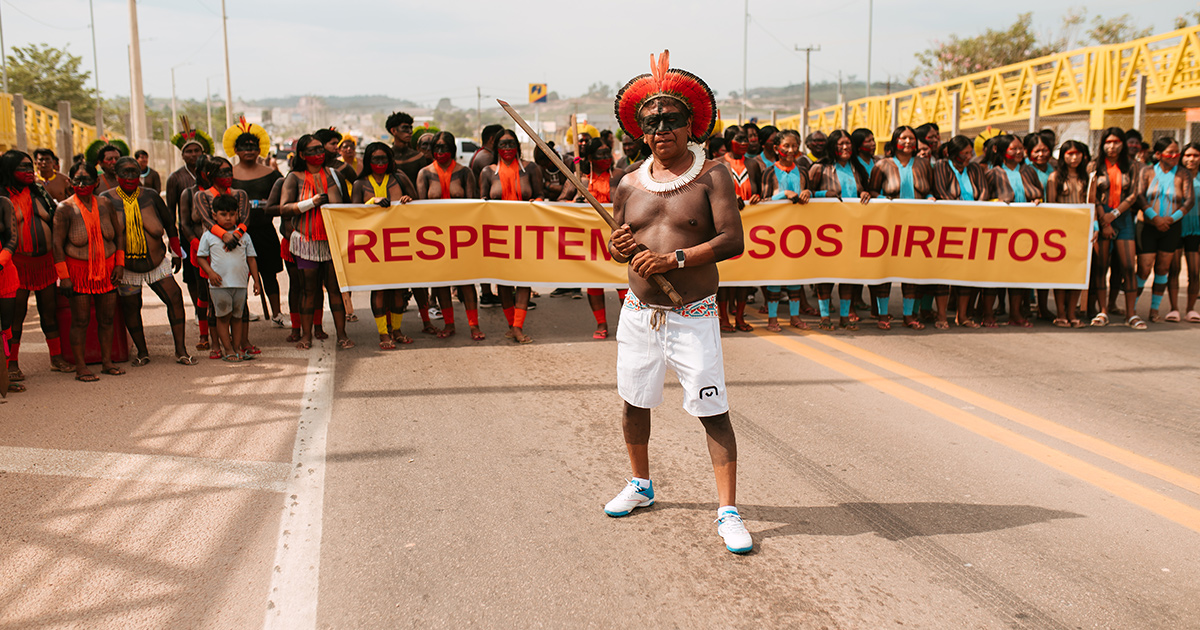
The Kayapo Project is an Indigenous-led NGO alliance ensuring Mebêngôkre-Kayapo (Kayapo) cultural, economic, political, and territorial autonomy over more than nine million hectares of federally demarcated Indigenous lands located in the highly threatened southeastern Amazon.
The Kayapo Project is the flagship program of Biome Conservation (International Conservation Fund of Canada). Biome partners with three Kayapo NGOs: the Protected Forest Association, Kabu Institute, and Raoni Institute representing communities of the northeast, northwest and southwest sectors of Kayapo territory.
With more than 90,000km2, Kayapo’s protected territory is comparable to the size of countries like Ireland, South Korea, or the US State of West Virginia.
Satellite image of Kayapo lands and most of the Xingu Indigenous Park (to the south) showing plumes of smoke rising from burning of primary forest remnants outside of the Indigenous Territories. Dark green areas are indigenous lands and light brown areas are ranch and agricultural land.
Our mission
The Kayapo Project is an Indigenous-led NGO alliance ensuring Mebêngôkre-Kayapo (Kayapo) cultural, economic, political, and territorial autonomy over more than nine million hectares of federally demarcated Indigenous lands located in the highly threatened southeastern Amazon.
With more than 90,000km2, Kayapo’s protected territory is comparable to the size of countries like Ireland, South Korea, or the US State of West Virginia.
The Kayapo Project is the flagship program of the International Conservation Fund of Canada (ICFC). ICFC partners with three Kayapo NGOs: the Protected Forest Association, Kabu Institute, and Raoni Institute representing communities of the northeast, northwest and southwest sectors of Kayapo territory.
Mẽbêngôkre
The Kayapo call themselves Mẽbêngôkre, a name that can be translated as “People of the Water Hole”. The Kayapo are an Indigenous group living in the Brazilian States of Mato Grosso and Pará An estimated 12,000 Kayapo live amongst approximately 50 villages across more than 9 million hectares on five federally demarcated Indigenous lands.
The Kayapo reside in a transitional area between the cerrado and the Amazon forest, encompassing the forest itself. The heart of their village serves as the nucleus of their cosmological universe.
Mẽbêngôkre
The Kayapo call themselves Mẽbêngôkre, a name that can be translated as “People of the Water Hole”. The Kayapo are an Indigenous group living in the Brazilian States of Mato Grosso and Pará An estimated 12,000 Kayapo live amongst approximately 50 villages across more than 9 million hectares on five federally demarcated Indigenous lands.
The Kayapo reside in a transitional area between the cerrado and the Amazon forest, encompassing the forest itself. The heart of their village serves as the nucleus of their cosmological universe.
Guardians of the Forest
Defending the land
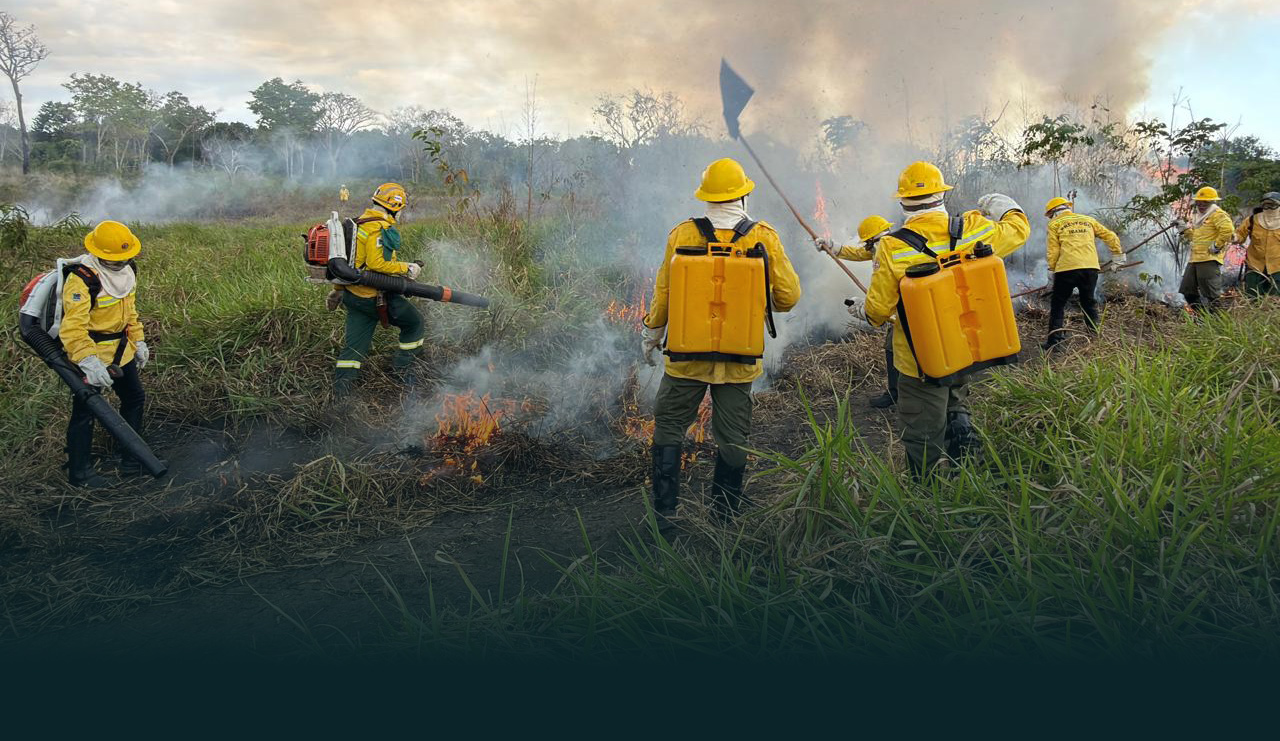
The Kayapo are stewards of the world’s largest Indigenous managed Tropical Forest, home to countless species of plants, animals, insects. Moreover, Kayapo territories sequester an estimated 1.3 billion metric tonnes of carbon dioxide, regulating the planet’s climate. Kayapo territory is a vast, biodiverse haven stocked with carbon. This land is not just a place, but an integral part of the Kayapo identity. Defending it from external threats like goldminers, loggers, and poachers is a complex endeavor, undertaken through the collaborative efforts of the Kayapo-NGO alliance.
Preserving knowledge
The Kayapo Project embodies a holistic approach to preserving Kayapo culture and territory, rooted in ancestral knowledge. By perpetuating traditional practices such as harvesting Brazil nuts and cumaru seeds, the Kayapo sustain their livelihoods while safeguarding their ecological heritage. Through the promotion of artisanal craftsmanship, they generate economic opportunities and assert their cultural resilience. These initiatives demonstrate the power of translating traditional wisdom into actionable strategies for sustainable development.
Guardians of the Forest
Defending the land
The Kayapo are stewards of the world’s largest Indigenous managed Tropical Forest, home to countless species of plants, animals, insects. Moreover, Kayapo territories sequester an estimated 1.3 billion metric tonnes of carbon dioxide, regulating the planet’s climate. Kayapo territory is a vast, biodiverse haven stocked with carbon. This land is not just a place, but an integral part of the Kayapo identity. Defending it from external threats like goldminers, loggers, and poachers is a complex endeavor, undertaken through the collaborative efforts of the Kayapo-NGO alliance.
Preserving knowledge
The Kayapo Project embodies a holistic approach to preserving Kayapo culture and territory, rooted in ancestral knowledge. By perpetuating traditional practices such as harvesting Brazil nuts and cumaru seeds, the Kayapo sustain their livelihoods while safeguarding their ecological heritage. Through the promotion of artisanal craftsmanship, they generate economic opportunities and assert their cultural resilience. These initiatives demonstrate the power of translating traditional wisdom into actionable strategies for sustainable development.
Stories
The Ancient Trails Project
July 22, 2026
An ancient path traveled by the Kayapó people about 90 years ago has been opened again in an expedition that unites science, traditional knowledge and conservation of the Amazon.
A week at the heart of the Bákra Forest School
June 27, 2026
Eight weeks of this schedule was a lot. A lot of personal growth, a lot of immersion within the Mebengôkre-Kayapó culture, a lot of time to practice speaking Mebengôkre, and a lot of opportunity to actually form relationships with the people whose association I had been working in for the past year.
Indigenous-Led Conservation: Matt’s Journey to Kayapo Territory
June 17, 2026
In May 2026, Matthew Aruch traveled across Mato Grosso and into Kayapo territory for governance meetings with the Instituto Raoni and the Instituto Kabu’s general assembly. Field notes on partnership, the road to Pykany, and what Indigenous-led conservation looks like up close.
Large Scale Conservation
March 23, 2026
Through strong governance systems, including territorial monitoring and guard posts, they have maintained the integrity of their forest across millions of hectares. This continuity creates stability across a vast, intact landscape.