I think it must have been difficult to name Bákra: The Kayapó Forest School, because it is so many things at once. It is a school, but it is also a thriving ecosystem that lifts up elders, creates equitable jobs, and builds community through shared joy.
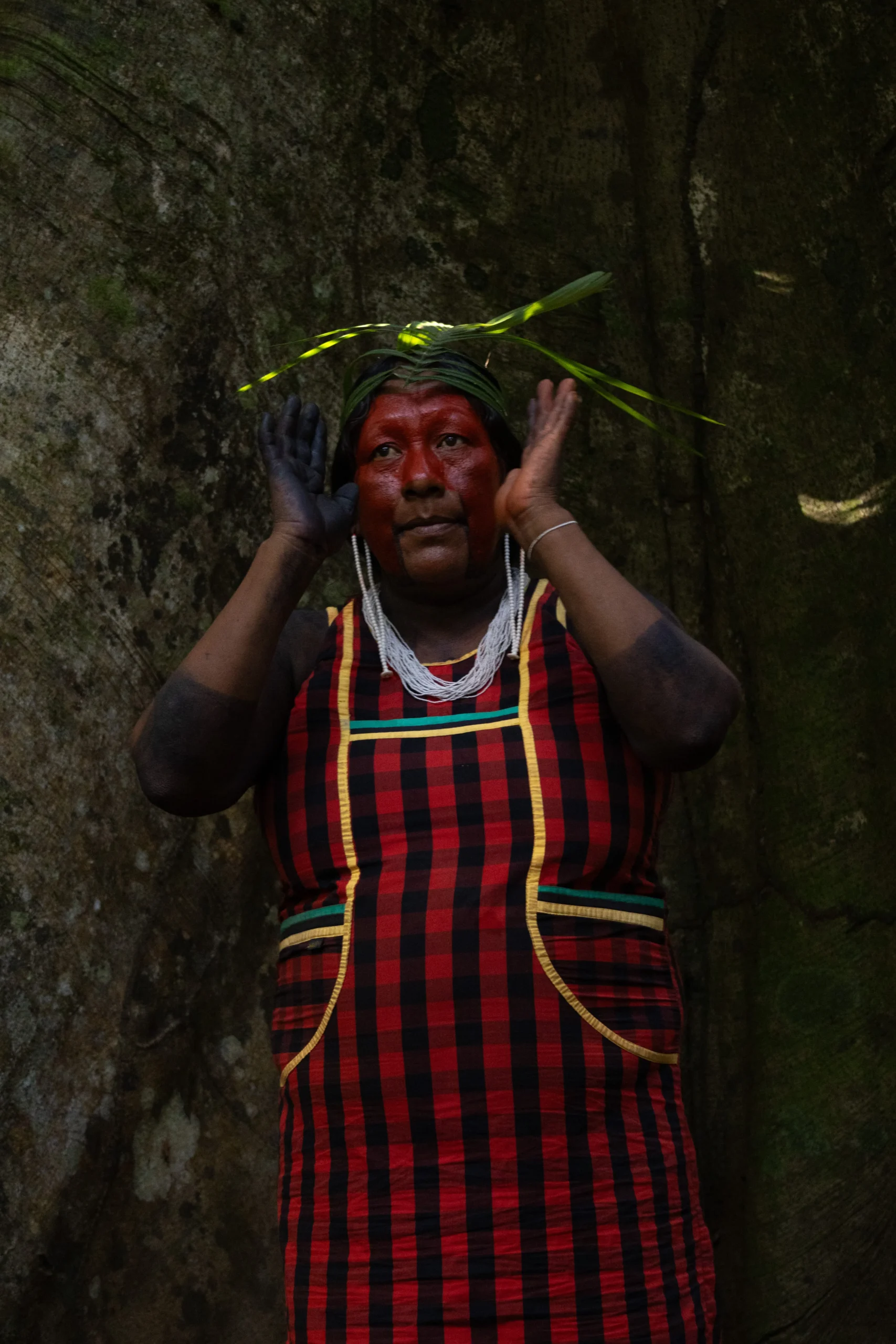
Each week, a new group of 20–30 Kayapó arrived at Kamotidjam — and then at the Bàkra campus, Kajgodjam, once it was ready to host them — and they arrived in force. The elders always arrived enthusiastic and ready to hit the ground running, decked out in their traditional attire: feather headdresses, beaded bracelets, armbands and necklaces, painted in vibrant jenipapo, the Amazonian fruit traditionally used by Indigenous peoples to stain their skin.
With each group, we did a round of introductions to start. I thought it was endearing how each of the elders would stand up and make a large speech about how they were excited to be there and the importance of the program — and then each of the students would stand up and shyly whisper their name and the name of their village.
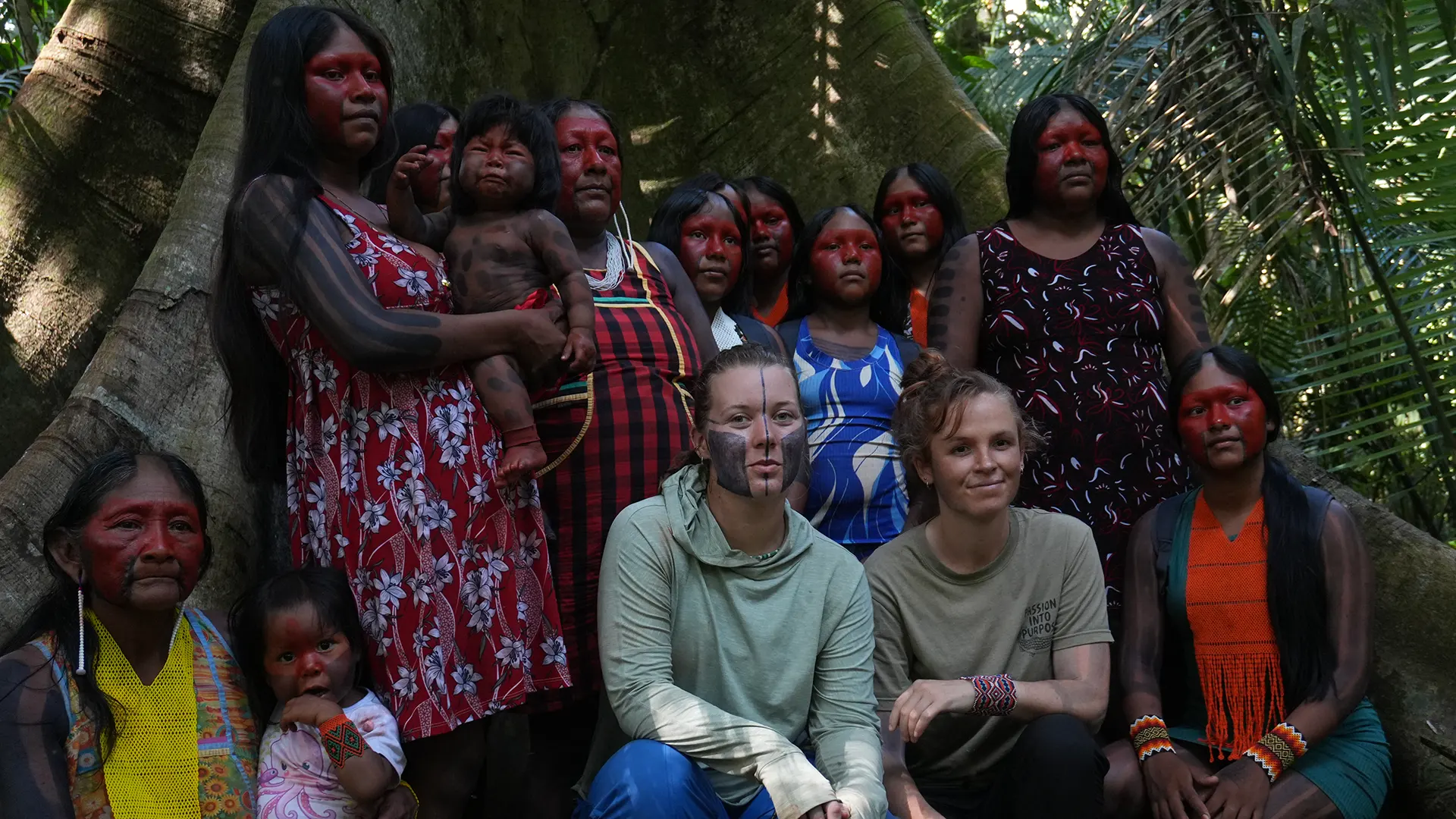
Faces marked in Jenipapo and urucum,
Bákra worked on an intense schedule of activities, driven by what the elders wanted to teach and where they wanted to take their students. A typical week looked like this.
A week at the forest school
Tents, the circle, and the first story
The group arrived in the afternoon from their villages. After everybody set up their tents and settled in, we formed a conversation circle so that everyone could introduce themselves, and our Indigenous coordinators presented the schedule, rules, and expectations of the program. We passed out the t-shirts and student kits while the cooks started preparing dinner. An elder would often tell a traditional story on this first night.
Jenipapo, then into the forest
The people who didn’t arrive already fully painted would paint each other in jenipapo in preparation for entering the forest. They would often paint me as well. I loved the process, and it was always exciting to see what design they would come up with — I rarely wore the same one for very long, as the stain faded pretty quickly, and one of our coordinators, Bekwykukati, would always call me over to redo my paint when it started to fade from my face. In Kayapó culture, many people prefer to be painted before dancing, so it was essential to paint everybody at the start of the program, because there was lots of dancing to come.
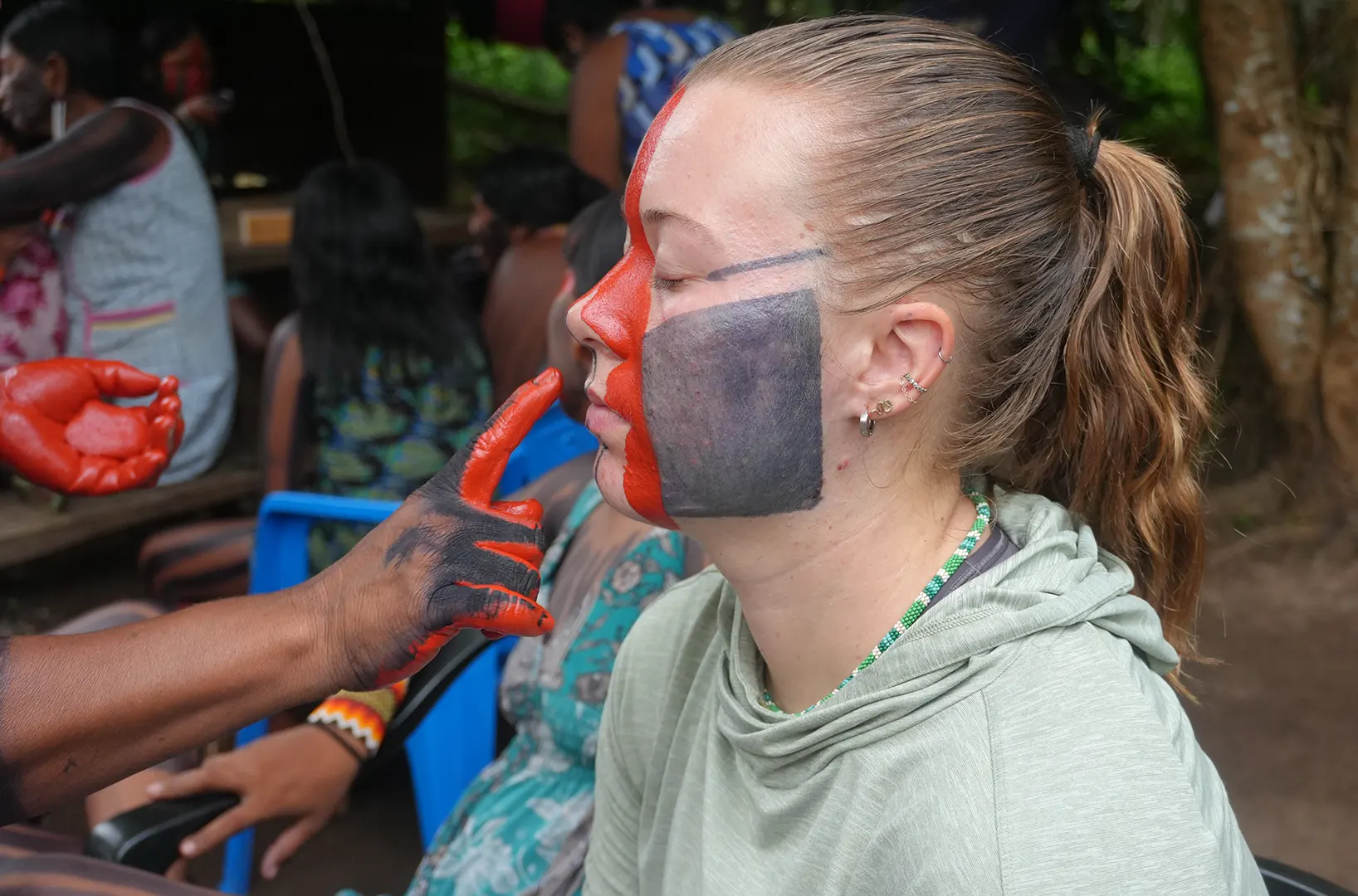
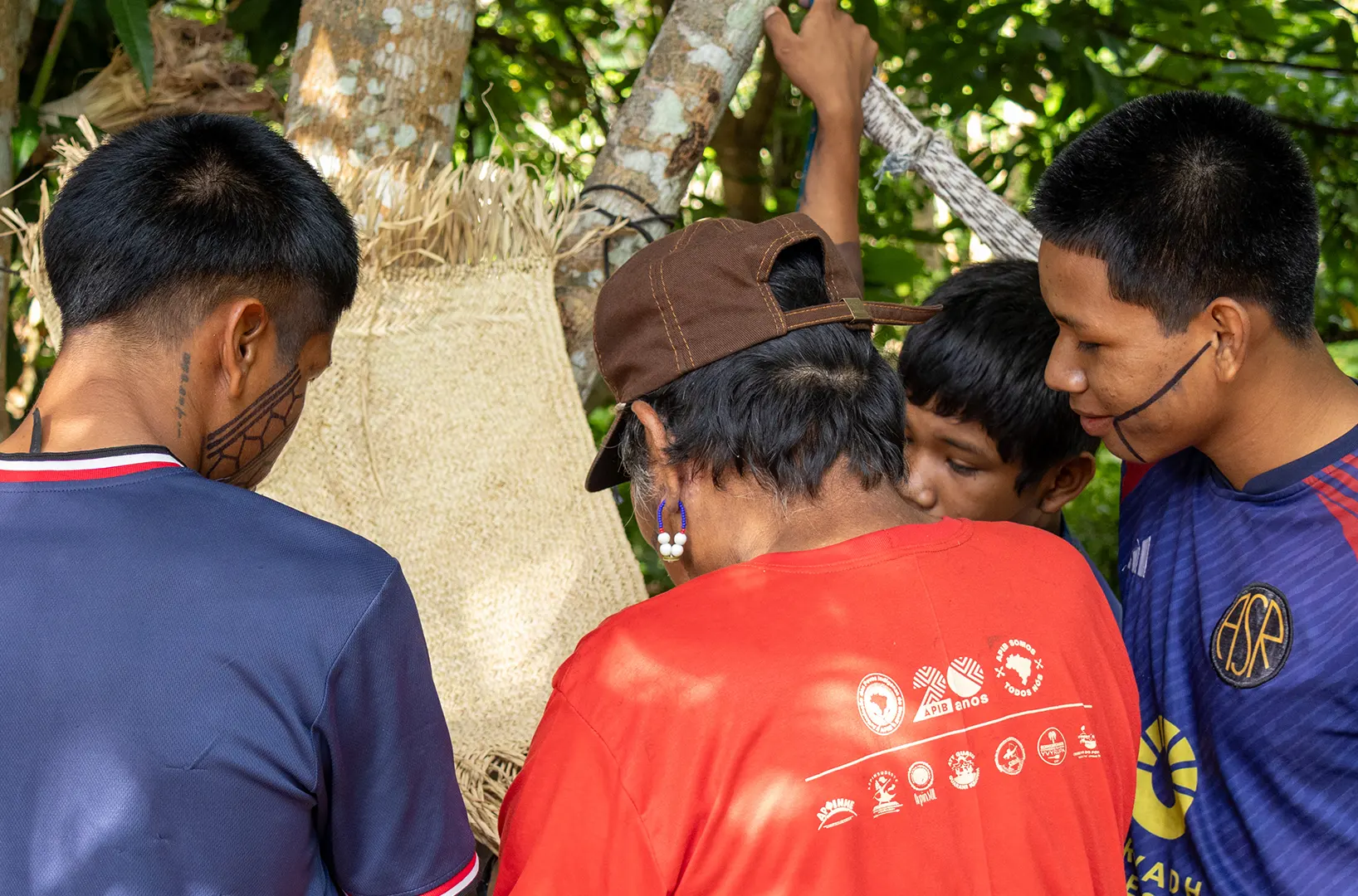
Getting painted with Urucum was a part of every morning before heading out into the forest.
After everybody got painted, our coordinator — or a returning student who knew how to use the cameras and camera traps — gave a brief lesson before we ventured into the forest, usually to a mud pit to install the traps. The elders led the group and pointed out animal paths or hotspots that would make good locations. The students verified that each camera had enough battery and a SIM card installed before deploying them on tree trunks, low to the ground.
Once everybody had their cameras installed, we headed back to camp to eat lunch and relax before the afternoon handicraft — usually the men doing one activity and the women another. The women might paint fabric with their traditional designs while the men wove baskets or other items. After dinner, the whole group might dance together under the stars or around a fire.
Ronko, the Piti tree, and the drones
In the morning we set out early — usually by boat, then on foot — to one of a variety of traditional sites. One was Ronko, an abundant grove of coco de babaçu, a delicious food that tasted a bit like coconut and was also used to make oil for hair or cooking. The grove was home to an enormous Piti tree where we would often do traditional dances and sing traditional songs.
There was also a nice clearing that was great for teaching the students how to launch and collect the drones. We would try to get an aerial view of the site and talk about why it was important and how drones can be used for territorial monitoring. The elders usually stuck to the back of the group, collecting plants and barks that might be useful as medicines or in that afternoon’s handicrafts — and if we came across an açaí tree, people took turns trying to climb it to cut down the fruits at the top.
Later, after lunch, the women would often bead, crochet, or prepare a traditional meal like Berarubu, while the men made a feather headdress or a wooden war club. At night, the whole group gathered by the fire as an elder told a traditional story. My favorite was the one about the man who fell in love with a woman in the stars, who eventually brought down all the good foods they enjoy eating today — manioc, pumpkin, and papaya.
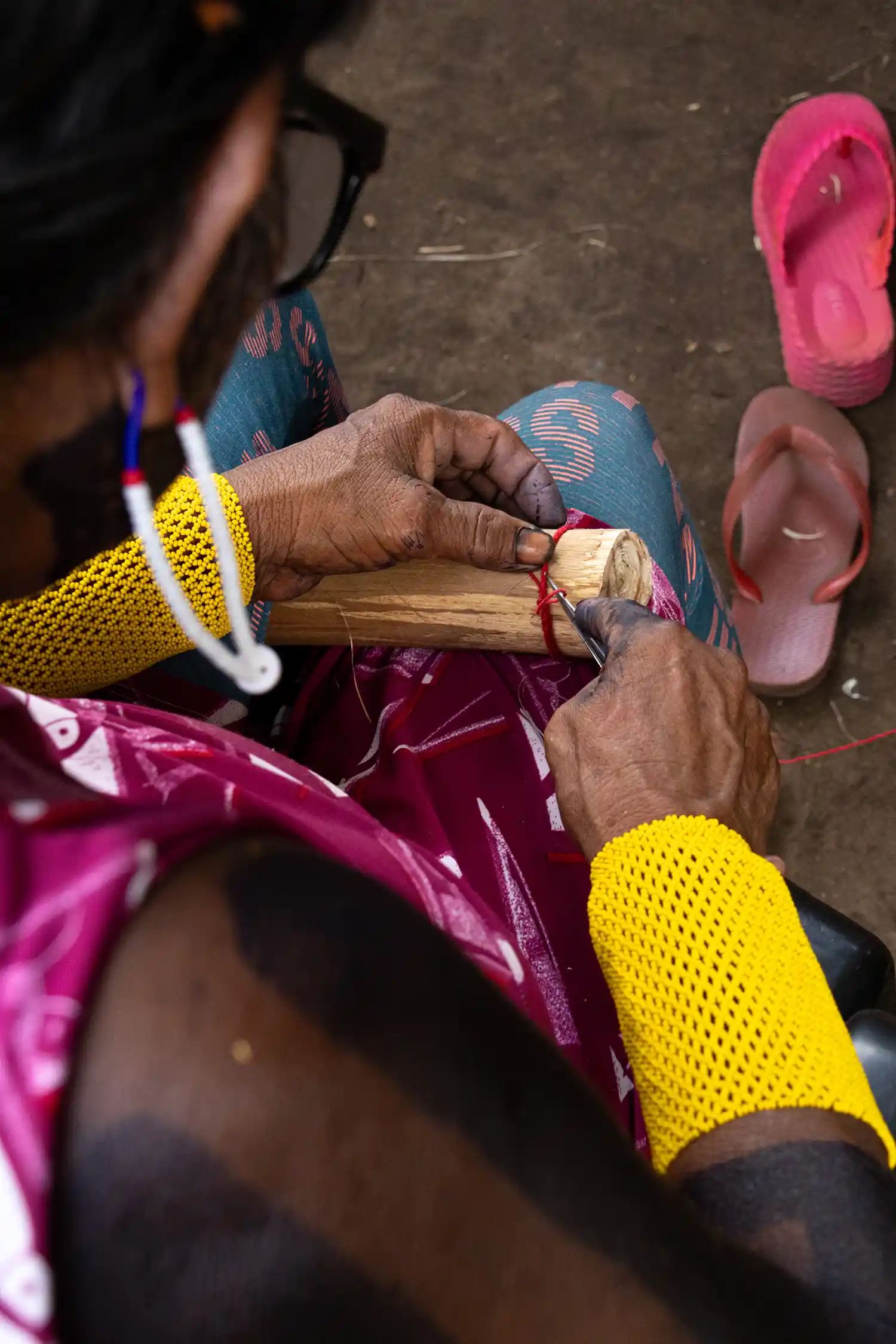
An elder teaching the girls how to crochet the traditional leg bands that the young children wear.
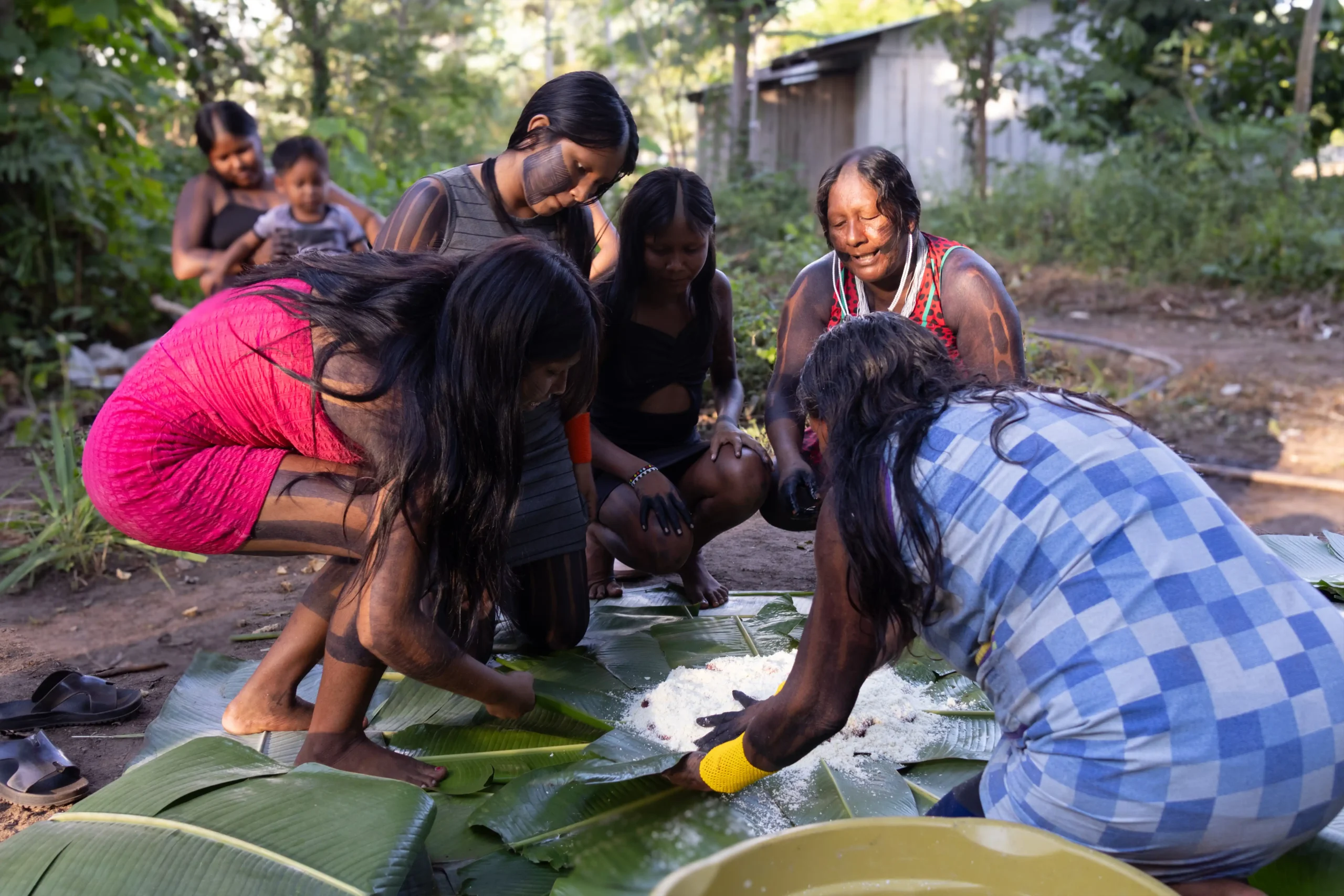
Berarubu in the making — manioc flour and meat folded into banana leaves, hands working together across generations.
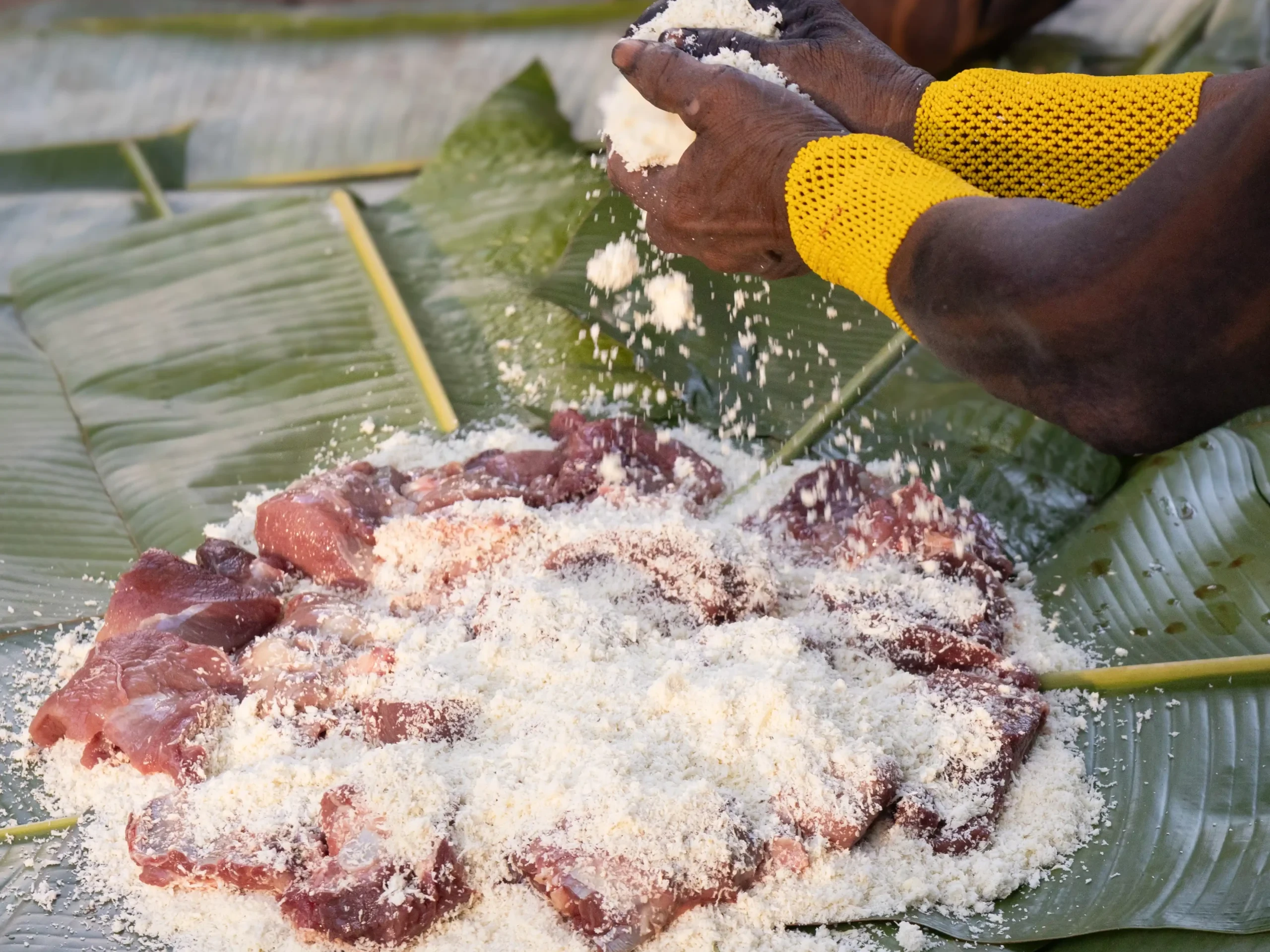
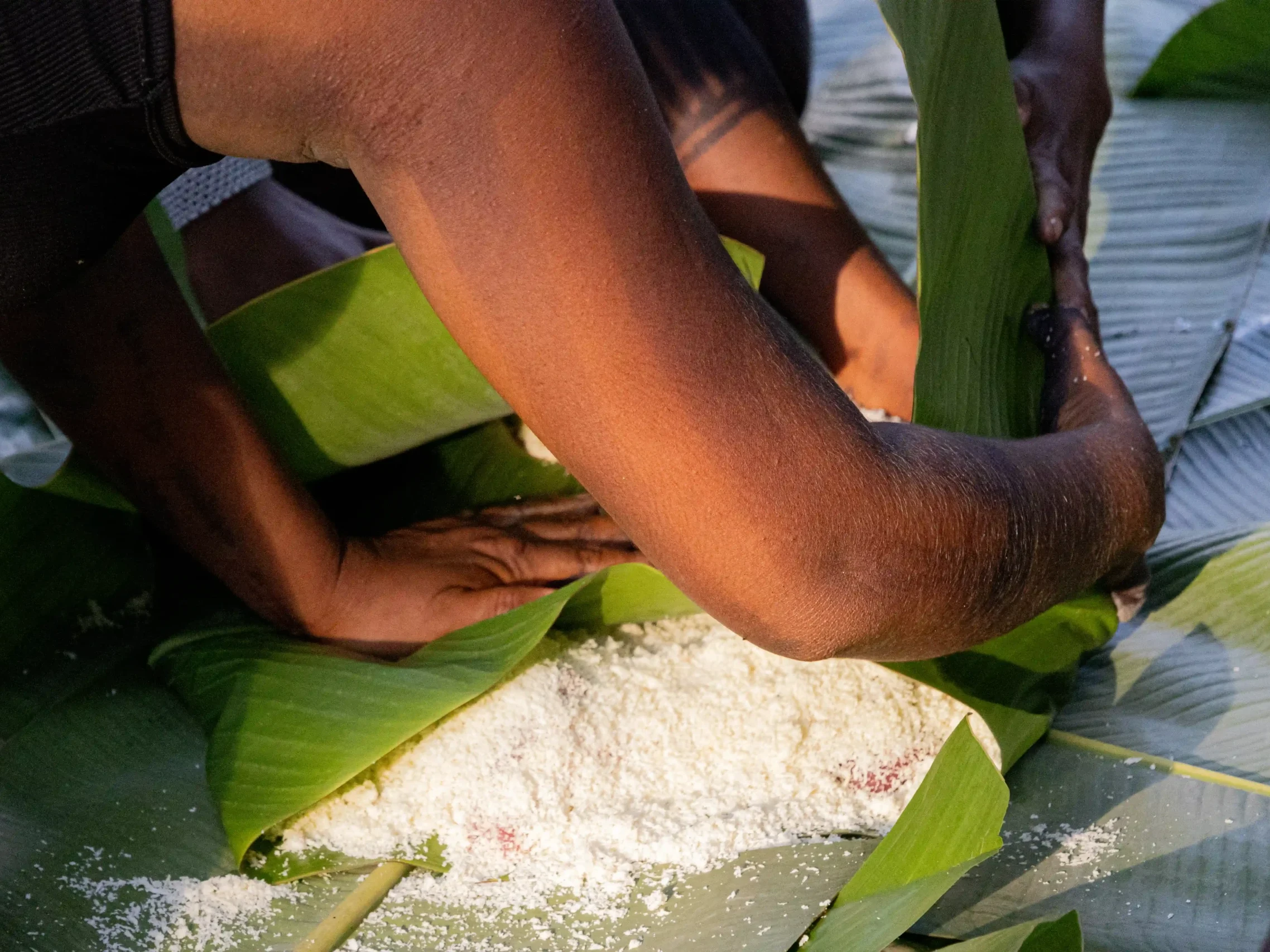
Layering and wrapping the parcel before it goes to the coals.
What the cameras caught
In the morning we set out to collect the camera traps from the first day, and everybody came back into camp itching to see the photos. We would pull them up on a laptop and the whole group gathered around to ooh and ahh at everything the cameras caught. It was exciting to see the biodiversity we captured in just four days — tapirs, anteaters, a variety of birds, and, surprisingly for me, deer similar to those I saw in my backyard growing up in Virginia.
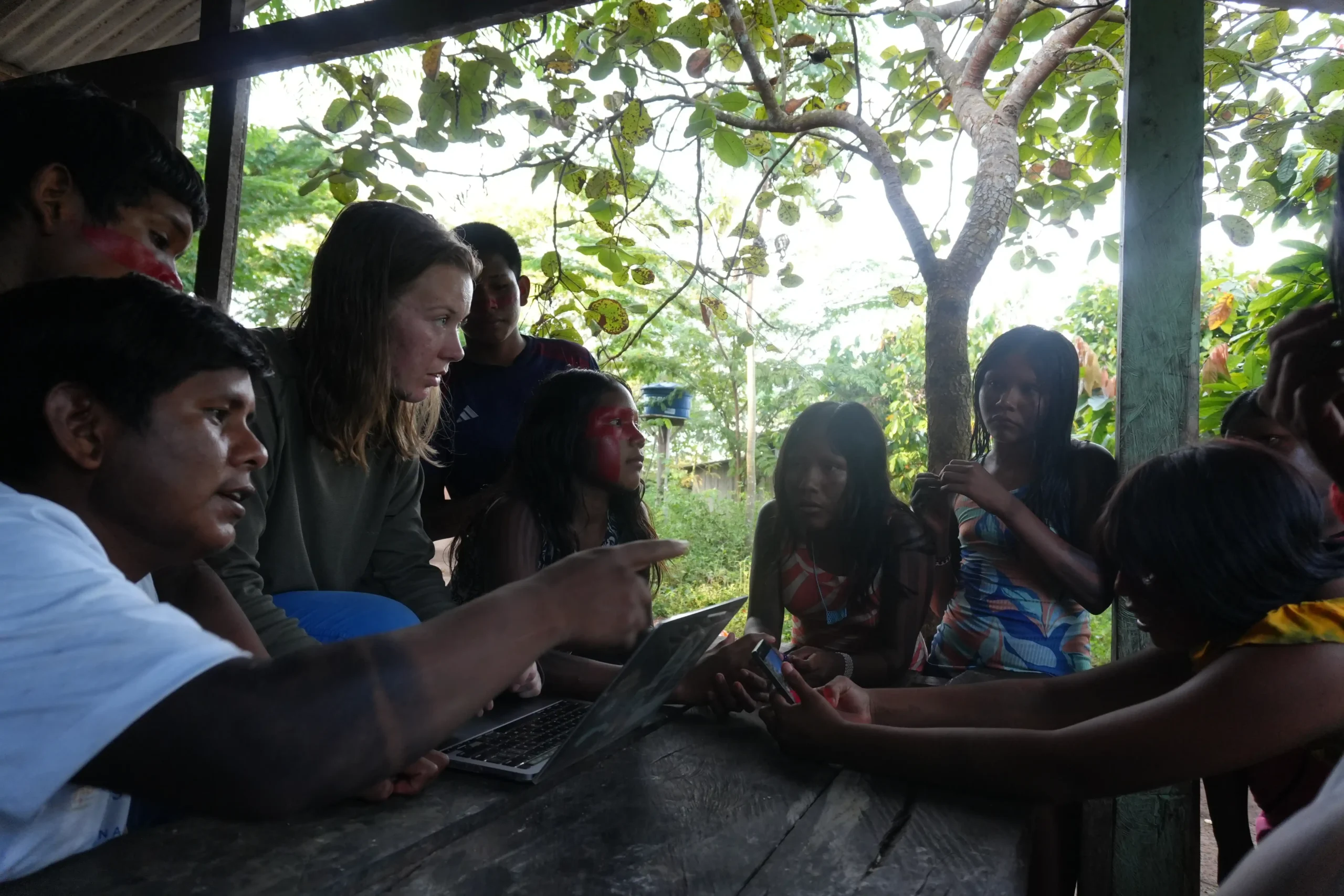
Registering students for the Forest School.
After coffee and breakfast, the group departed — and we reset for the next one.
What eight weeks held
Eight weeks of this schedule was a lot. A lot of personal growth, a lot of immersion within the Mebengôkre-Kayapó culture, a lot of time to practice speaking Mebengôkre, and a lot of opportunity to actually form relationships with the people whose association I had been working in for the past year.
The importance of this program is undeniable. The passing down of culture and tradition has stagnated — young women struggling to climb the açaí trees their grandmothers scale with ease, young men not knowing the words to their traditional songs.