
Fire has always been part of life in the Kayapo Indigenous Territory. For generations, Kayapo families have used fire to clear and renew their traditional crop fields, following knowledge about when and how to burn that has been passed down over centuries. But the conditions that knowledge was built for are changing.
The Kayapo Territory is home to one of the largest stretches of intact forest in the Amazon, and most of it stays moist enough to resist fire. But it sits at a transition zone. In the south, the forest gradually gives way to savanna, where vegetation is drier and fire spreads more easily. The whole region is also under growing pressure from climate change: this part of the Amazon is steadily getting drier, with more frequent droughts and longer, harsher dry seasons. As the forest loses moisture, a fire that gets out of control can turn into a wildfire that destroys large areas of forest, crops and hunting grounds within days.
This year the risk is even higher. The El Niño climate pattern can bring hotter, drier conditions to the region, which makes every use of fire more dangerous.
The instructor and firefighter, Traiú Assalu Mehinaco, ignites a plot of vegetation dominated by Brachiaria grass using a drip torch as part of a practical exercise during the course.
From September 9 to 11, 2026, the Protected Forest Association (Associação Floresta Protegida, AFP), Brazil’s National Foundation for Indigenous Peoples (Funai), and PrevFogo, the national fire prevention and firefighting center of Ibama (the Brazilian Institute of Environment and Renewable Natural Resources), held a fire management workshop in Kruwanhõngô village, in the Kayapo Indigenous Territory.
The main goal was to help communities prevent forest fires by using fire in their traditional crop fields in a proper, controlled way, drawing on both traditional knowledge and new techniques and equipment.
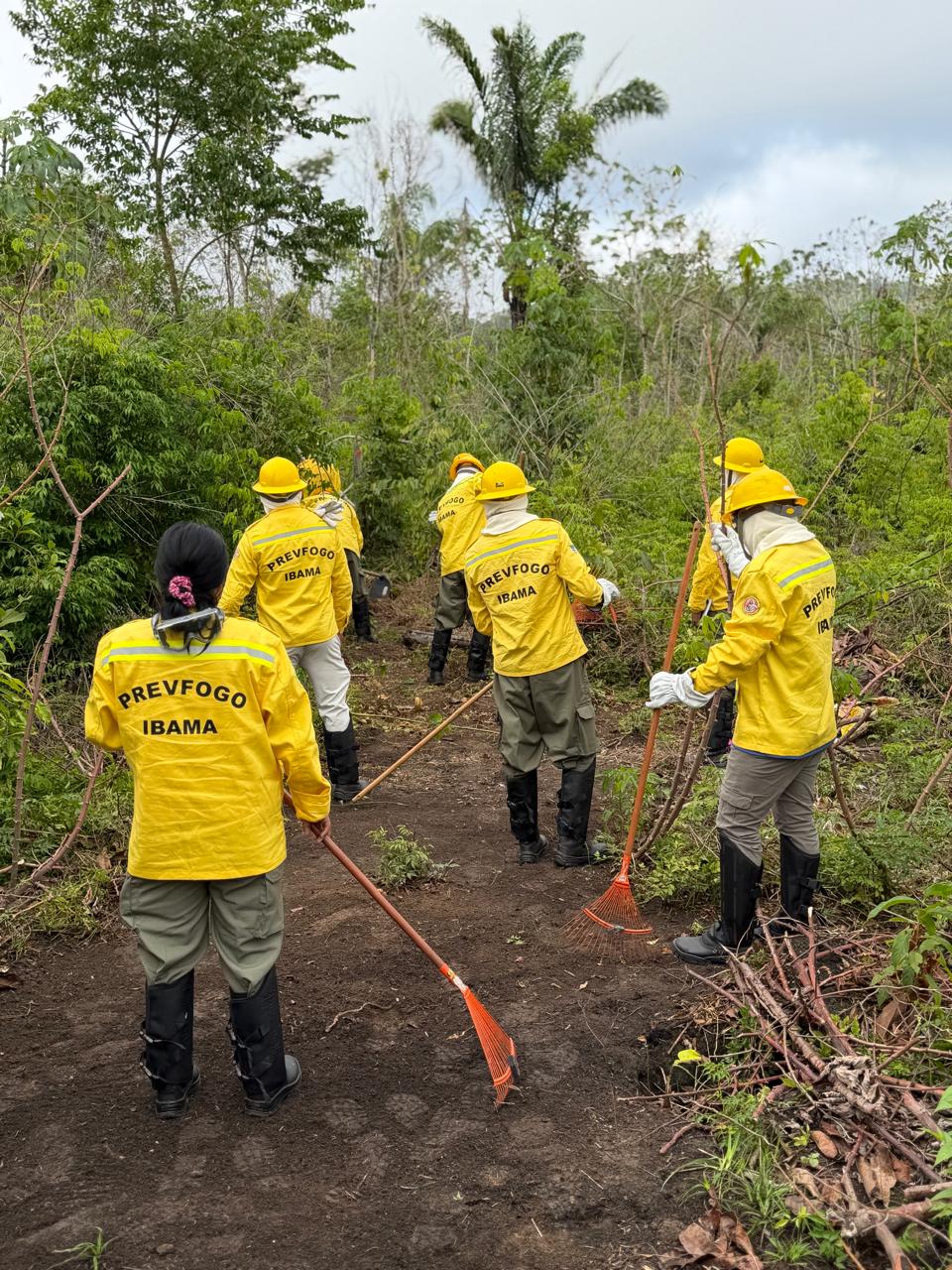
Kayapo course participants creating a “firebreak” as part of a practical exercise in forest fire prevention and suppression.
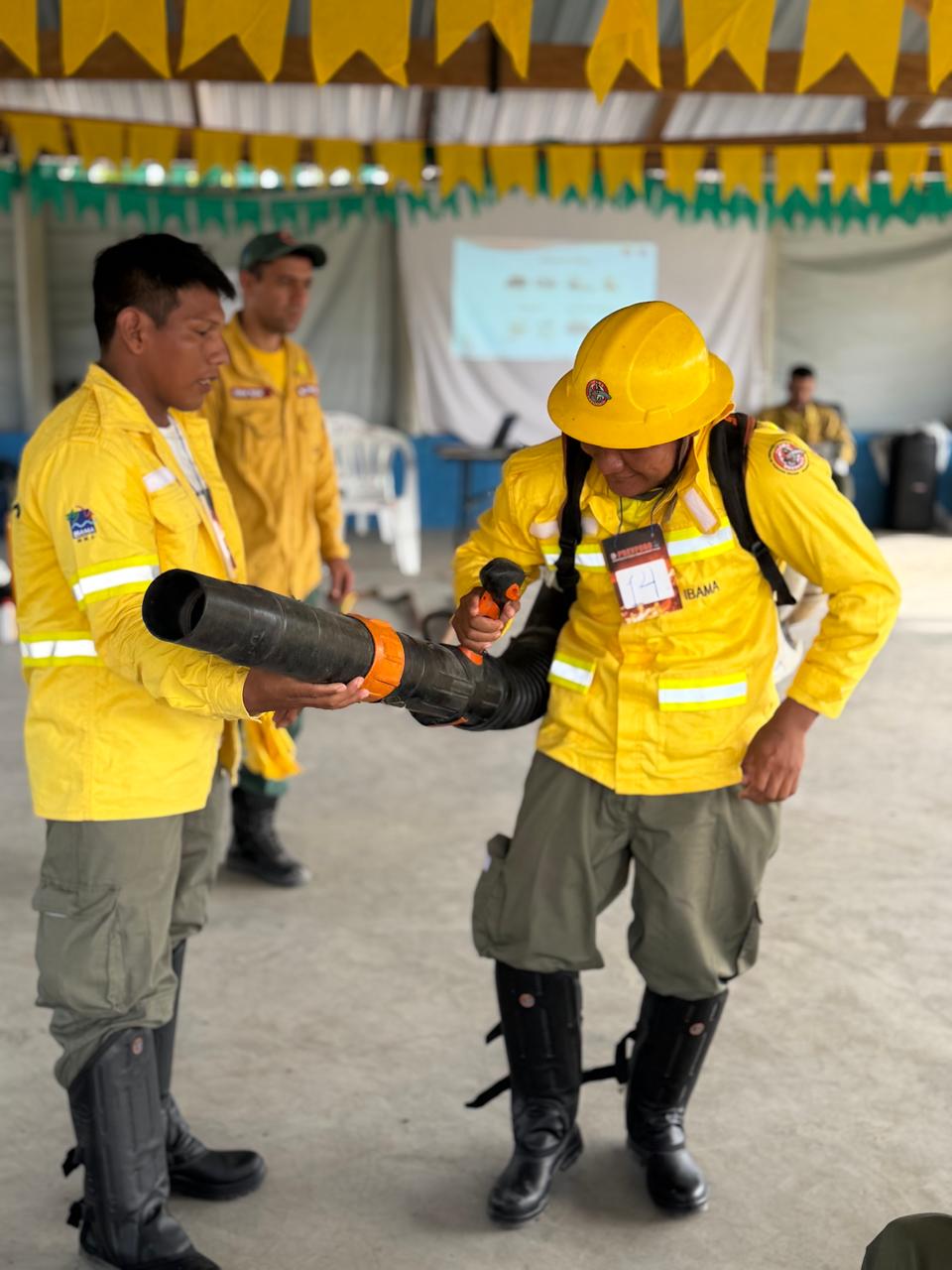
Training on the use of blowers for the prevention and suppression of forest fires during the fire management course.
The training reflected that combined approach. Experienced firefighters and instructors from PrevFogo and from Funai’s Integrated Fire Management Coordination provided technical training. They were joined by Traiú Assalu Mehinaco, an Indigenous firefighter and environmental educator from the Xingu Indigenous Territory, and by two Kayapo elders: Takaknhotire Kayapo of Kamoktidjam village and Takakmakoro Kayapo of Kokotkrere village.
Together, participants talked about the climate crisis and how it is affecting the weather, rainfall patterns and the vulnerability of the Kayapo Territory’s forests to wildfires. They also discussed why new strategies are needed to face this challenge, building on traditional knowledge while adopting new tools and methods.
Participants rated the workshop very positively and left motivated to share what they learned with their communities. Over the coming months, the 25 Kayapo participants will carry this work back to their villages and lead fire prevention efforts on the ground.
Before leaving, they made a set of collective agreements. Each participant committed to:
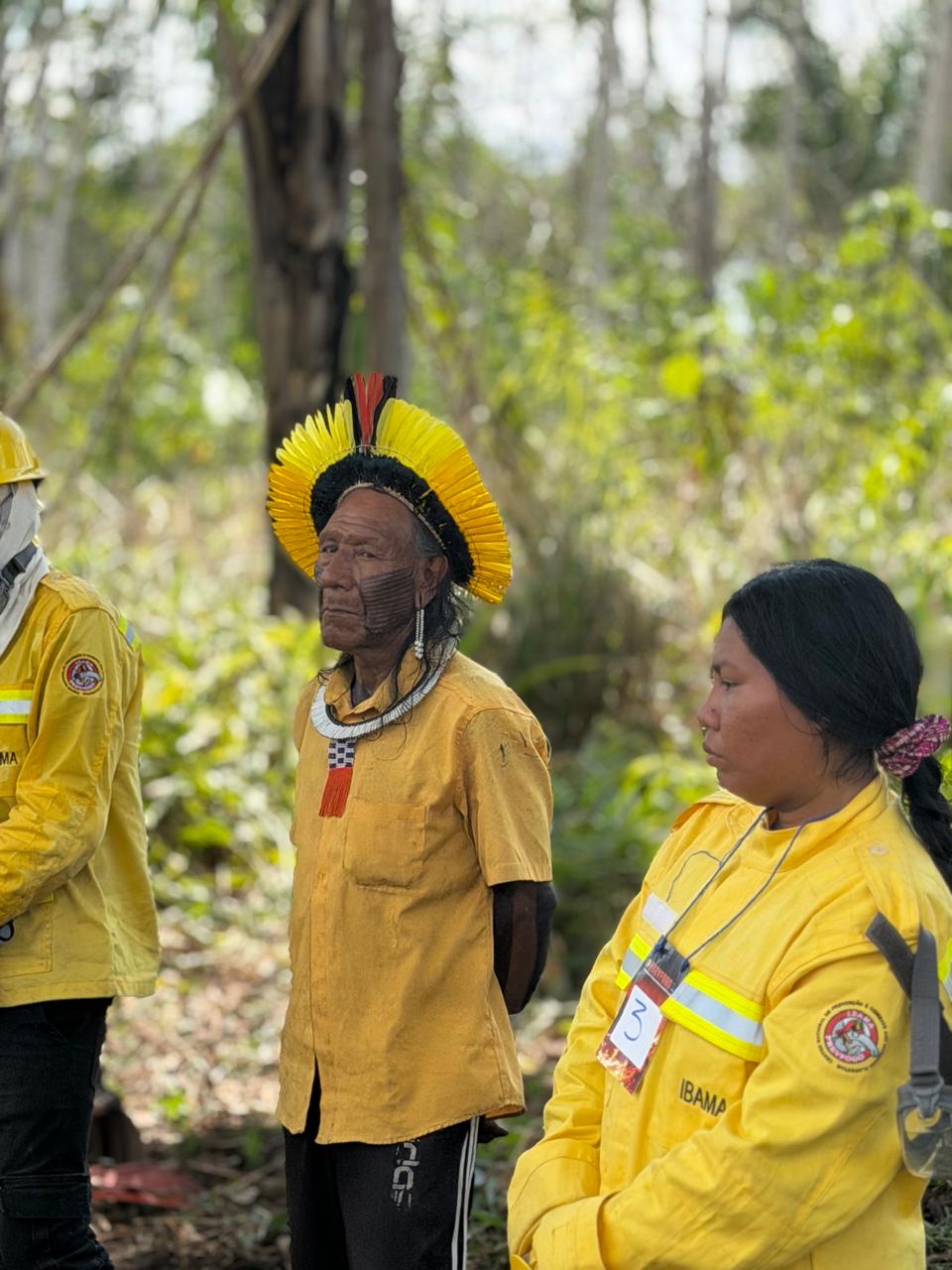
Holding meetings in their own community to raise awareness that every family has a role in preventing forest fires, and that more care is needed in all everyday uses of fire — cooking in the village, fire used on hunting and fishing trips, children playing with fire, and throwing away cigarette butts.
Reviewing how and where their community burns garbage, and taking steps to make this practice safer.
Supporting PrevFogo and Funai teams as they coordinate with communities across the Kayapo Territory, so that any crop fields still waiting to be burned are burned only with technical supervision from PrevFogo. This makes sure all preventive measures are in place and helps avoid forest fires, especially given the possible impacts of El Niño.
The workshop and the participants’ continuing work are the result of a partnership between AFP, Funai and PrevFogo/Ibama. Biome Conservation provides technical and financial support. Additional funding comes from Re:wild, the Bezos Earth Fund, and the Tradition and Future in the Amazon project (Tradição e Futuro na Amazônia), which is managed by Funbio with funding from Petrobras.