
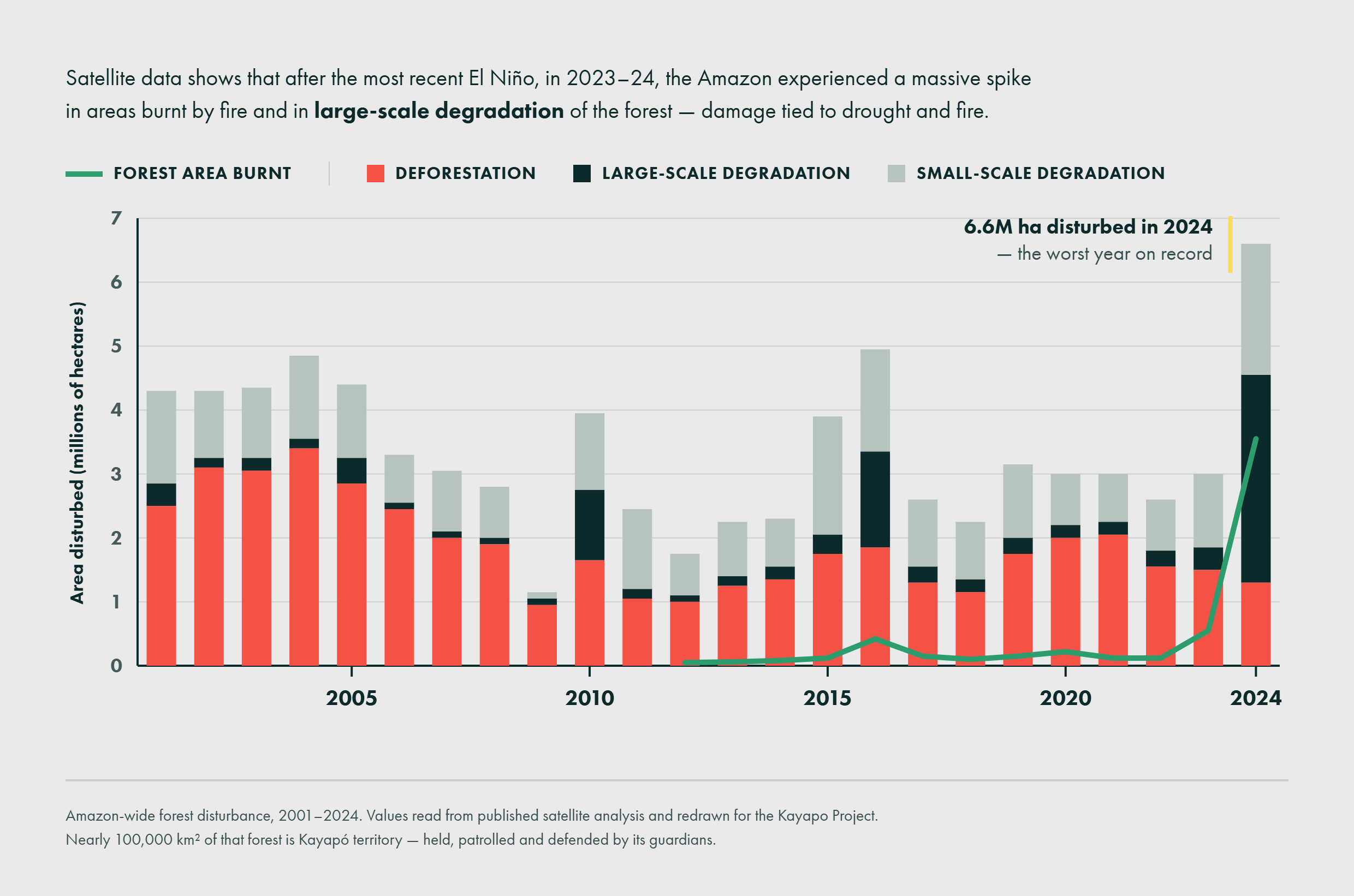
Brazil has genuinely good news this year: Amazon deforestation rates fell to their lowest level since 2013, with 2,874 square kilometers cleared between August 2025 and July 2026 [1]. That’s a 36% drop compared to the previous year. But there’s another headline that seems to contradict it: the number of wildfires across the Amazon rose by more than 30% in the same period, even as the area cleared went down [2].
Fire has become the tool of deforestation, not the byproduct
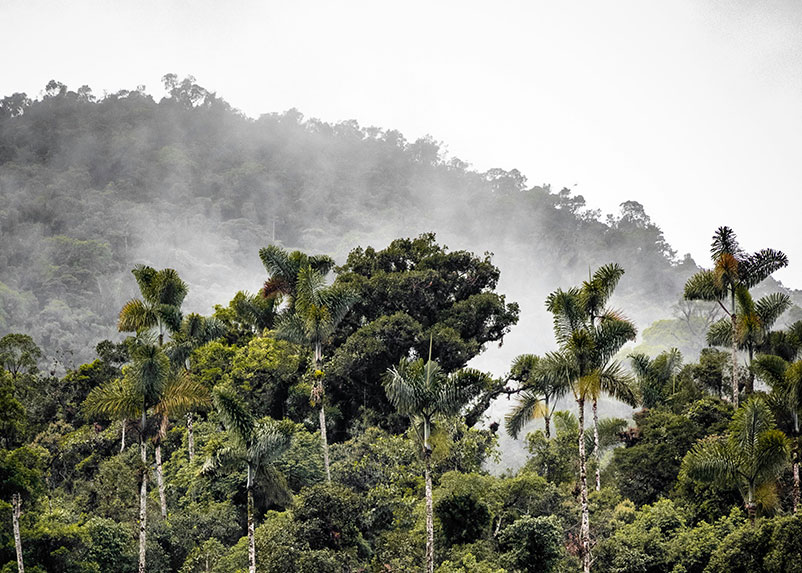
Photo: Unsplash
Analysts point to a simple incentive: burning is harder to trace back to a specific actor than chainsaw logging is, and scorched land degrades faster into something legally easier to claim. This isn’t a new pattern. Researchers first documented Amazon fire and deforestation decoupling nearly a decade ago, noting that even as annual deforestation rates dropped sharply, the occurrence of fire itself did not decline in step [3]. In 2026 that pattern is intensifying.
Timing makes this worse
Right now, August through October is the Amazon’s dry season, when fire risk typically peaks. This year that ordinary seasonal risk is stacked on top of an unfolding El Niño, historically the single biggest driver of severe Amazon drought and fire years. The 2024 Amazon drought, one of the worst on record, was compounded by El Niño conditions [4].
Forecasts for the exact strength of the current event vary in their specifics: NOAA puts the odds of it becoming a “very strong” event at around 80%, while Ecuador’s CIIFEN estimates roughly 69% odds that it will surpass previous records [5]. Forecasters broadly agree this is shaping up to be a major event, not a weak one, with some projecting it could be the strongest in over 150 years [6]. What forecasters largely agree on is the timing: fire risk is elevated in 2026 as El Niño develops, but the most severe impacts typically lag by about a year, putting the highest risk of a record-breaking fire season in the second half of 2027 [7].
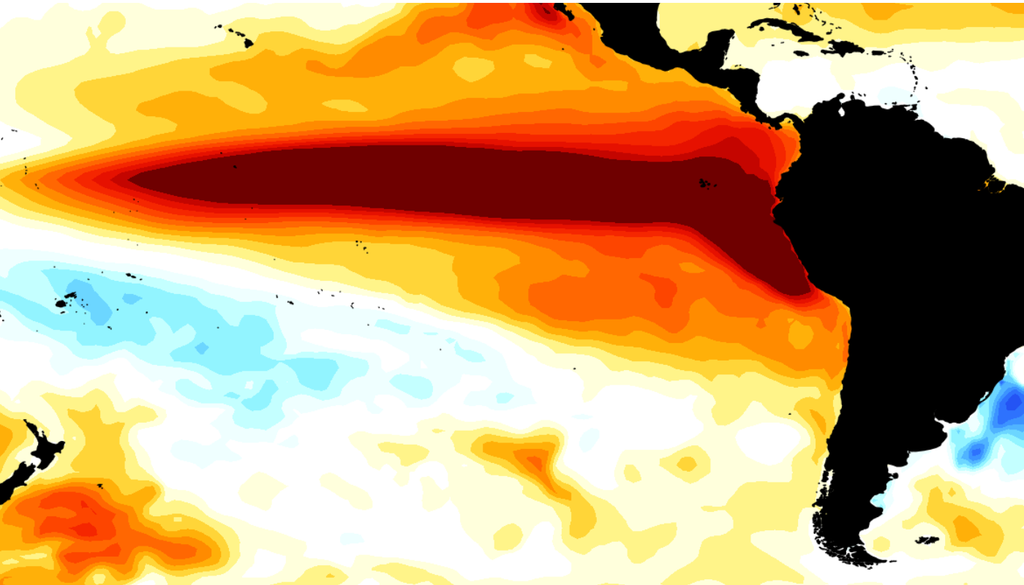
The seasonal forecast for September–November 2026 shows widespread warm anomalies in the equatorial Pacific, with sectors exceeding +3°C, reinforcing the signal of a high-intensity El Niño event. Source: NMME Ensemble Average, CIIFEN.
Intact forests are resilient
Its own humidity suppresses fire spread. What burns is forest that’s already been opened up — fragments with drier, more fire-prone edges, sitting right next to frequently burned pasture and regrowth [8].
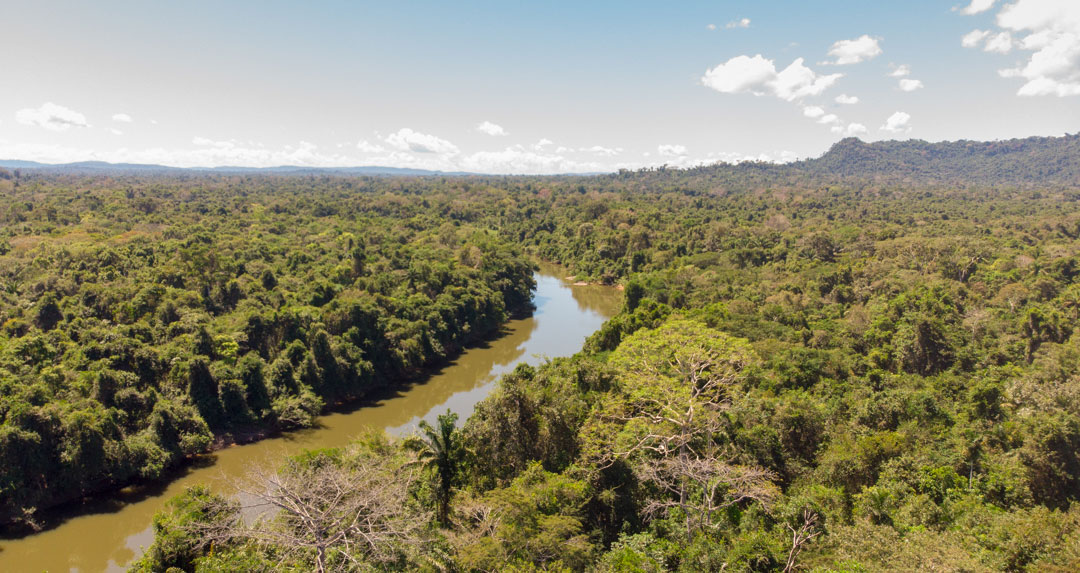
Photo: Pedro Peloso
A large-scale, decade-long burn experiment in the southeastern Amazon tested this directly [9]. Intact forest can shrug off a single low-intensity fire. But repeated burning during drought is a different story: it kills most of the trees, cuts canopy cover roughly in half, and lets invasive grasses move in. Forest edges fare worst of all, because that’s exactly where the drying and grass invasion are already most advanced.
The encouraging counterpoint: forest that stays intact keeps that natural resistance. A newer study found that even forests degraded by fire, drought, and windstorms in the southeastern Amazon can recover if left free of new disturbance — though the regrown forest remains more fragile against the next fire or drought [10]. Intact forest resists. Damaged forest doesn’t recover fully before the next hit.
Guard Posts are a shield against deforestation
Within the Kayapo’s roughly 11-million-hectare territorial bloc, we can compare the 9.4 million hectares that receive organized NGO-backed monitoring investment against the 1.2 million hectares that don’t — and deforestation hotspots cluster overwhelmingly in that smaller, unmonitored slice [11] [12].
The mechanism behind that pattern is straightforward: the Kayapo’s surveillance program covers more than nine million hectares through 16 guard posts placed at vulnerable entry points, functioning as both a physical deterrent and a signal that the territory is actively defended [11]. Those monitoring teams are credited with helping prevent the illegal logging, mining, and land invasion that would otherwise open the forest up: the exact process that turns fire-resistant forest into fire-vulnerable edge.
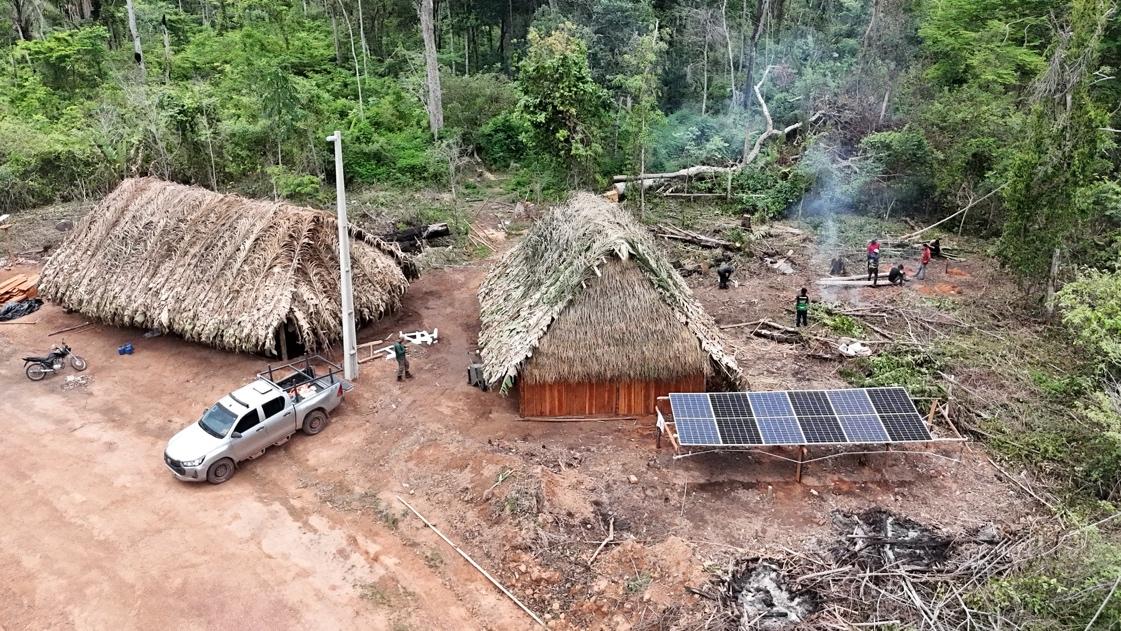
The Capoto guard post.
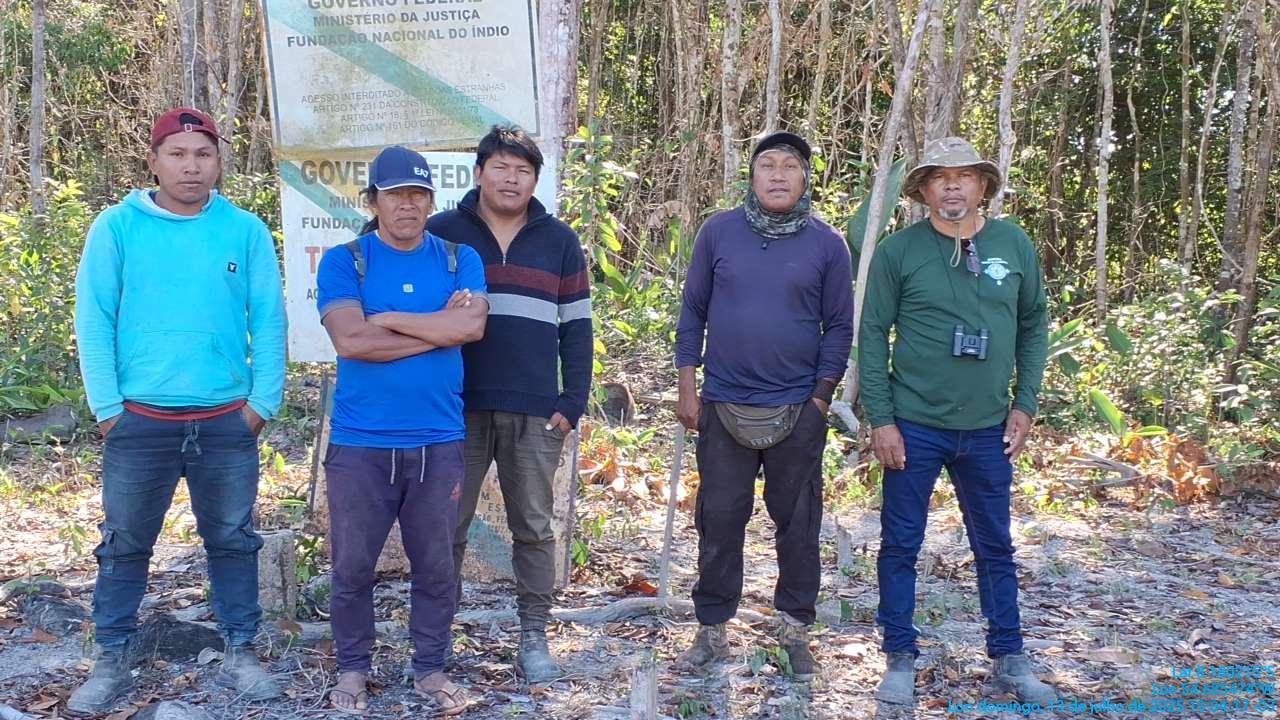
A Pykatoti guard team beside the official government sign marking the border of Menkragnoti territory.
The bottom line
Fire is increasingly the tool of choice on the Amazon’s frontier. This year’s dry season is landing on top of a developing El Niño whose worst effects, if the last two events are any guide, are still a year out. What determines whether a given hectare of forest survives that combination isn’t luck — it’s whether it stayed intact and defended, or got opened up first. Guard posts and territorial monitoring are one of the few interventions with a documented track record of keeping that first domino from falling.
- Mongabay, “Amazon deforestation alerts fall to lowest level since 2013, Brazilian data show” (August 2026)
- Inside Climate News, “Amazon Deforestation at Eight-Year Low, Report Shows” (May 2026)
- Aragão, L.E.O.C. et al., “21st Century drought-related fires counteract the decline of Amazon deforestation carbon emissions,” Nature Communications (2018)
- PBS News, “Extreme drought, wildfires and deforestation battered the Amazon rainforest in 2024”
- Meteored, “CIIFEN confirma: El Niño se fortalece, con 69% de probabilidad de superar récords” (2026); Nature, “A ‘super’ El Niño could transform the Amazon. Is the world’s biggest rainforest doomed?” (2026), citing NOAA’s ~80% odds of a “very strong” event
- AccuWeather, “The 2026 El Niño could become the strongest in a lifetime”
- Amazon Conservation Association, “A New Twist On El Niño: The Bigger Impacts Will Come In 2027”
- Yale School of the Environment, “Amazon Forests Can Recover From Fire — With Some Caveats”
- University of Colorado Boulder, “Decade-long Amazon rainforest burn yields new insight into wildfire vulnerabilities” (2015)
- “Forest recovery pathways after fire, drought, and windstorms in southeastern Amazonia,” PNAS (2026)
- Kayapo Project, “Defend”
- Biome Conservation / ICFC, “Kayapo Project”