
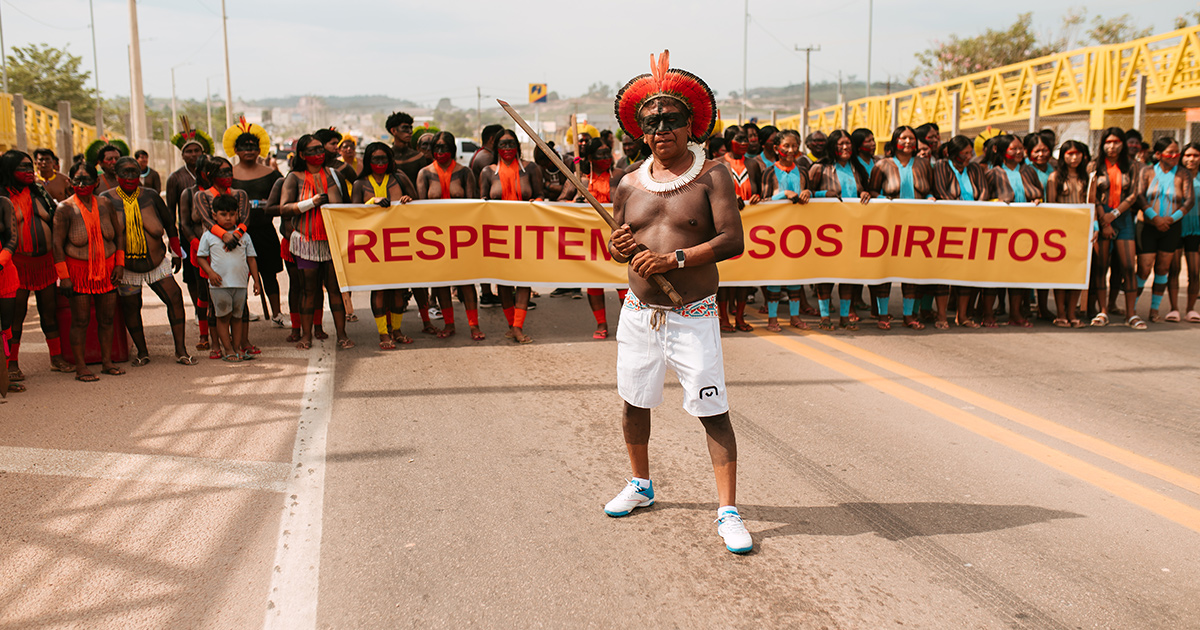
Kayapo and Panará block the BR-163
On Friday, September 25, Kayapo and Panará leaders gathered along the BR-163 highway in Novo Progresso, Pará. They had one clear demand for Via Brasil, the company that runs the highway: keep your commitments to the communities whose land this road cuts through.
The peaceful protest was organized by three Indigenous organizations: Instituto Kabu, Associação Iakiô and Associação Indígena Mantinó. With emergency protection measures set to expire on September 30, they say time is running out.
A highway that profits from Indigenous land
The BR-163 runs from Mato Grosso in the south to the Amazon River near Santarém in the north. It’s the main route for moving soy, corn and other grain out to overseas markets, and hundreds, sometimes thousands, of trucks pass through Novo Progresso on it every day.
Because the highway affects the Panará, Baú and Menkragnoti Indigenous Territories, the concessionaire is required to fund measures that reduce its impacts. These fall under the Indigenous Component of the Basic Environmental Plan (PBA-CI). Until the final plan is approved, a series of emergency measures funds the teams, infrastructure and territorial protection work the communities depend on.
The third cycle of those measures ends on September 30. Without a fourth cycle in place, all of that work could stop.
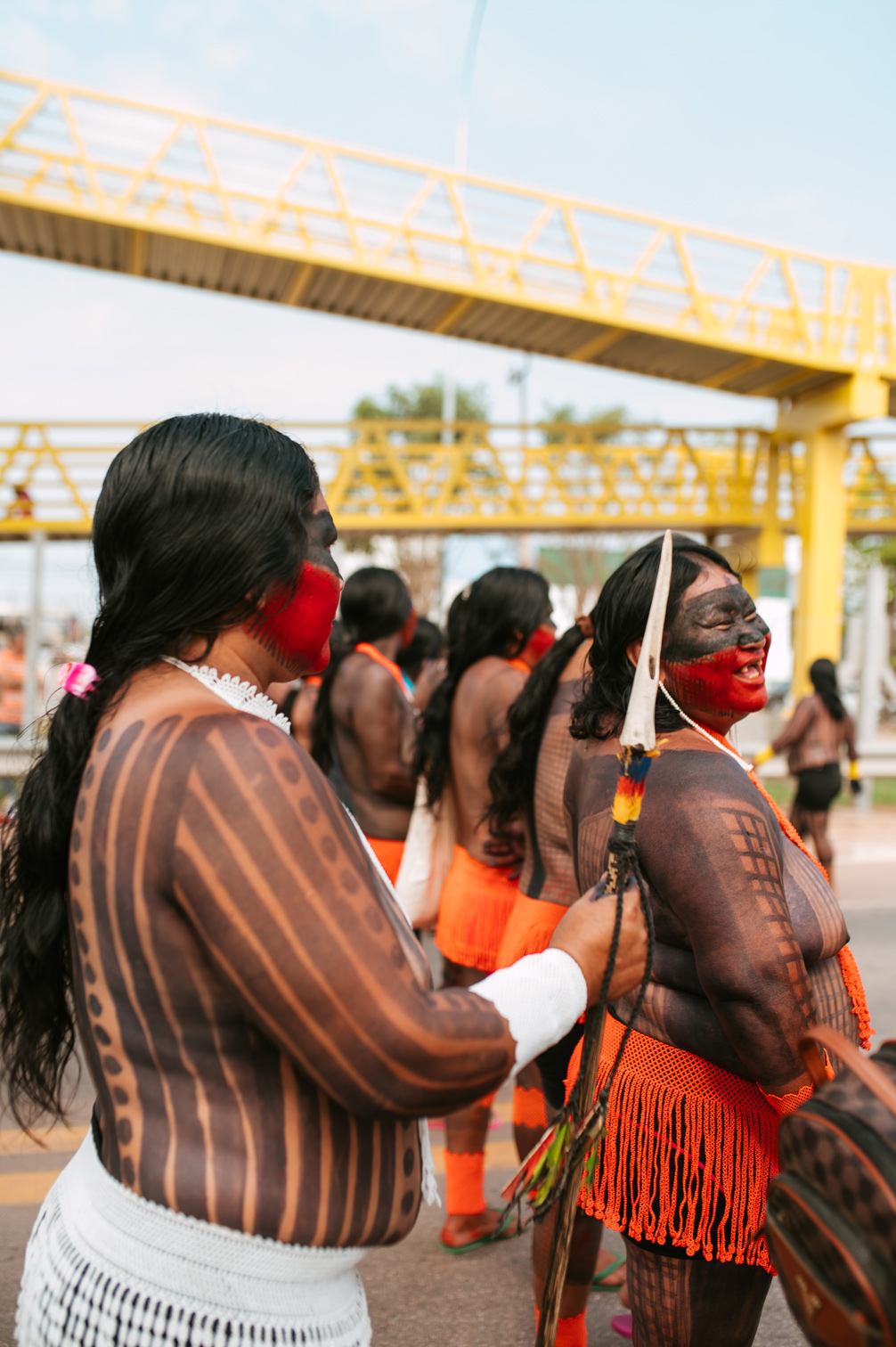
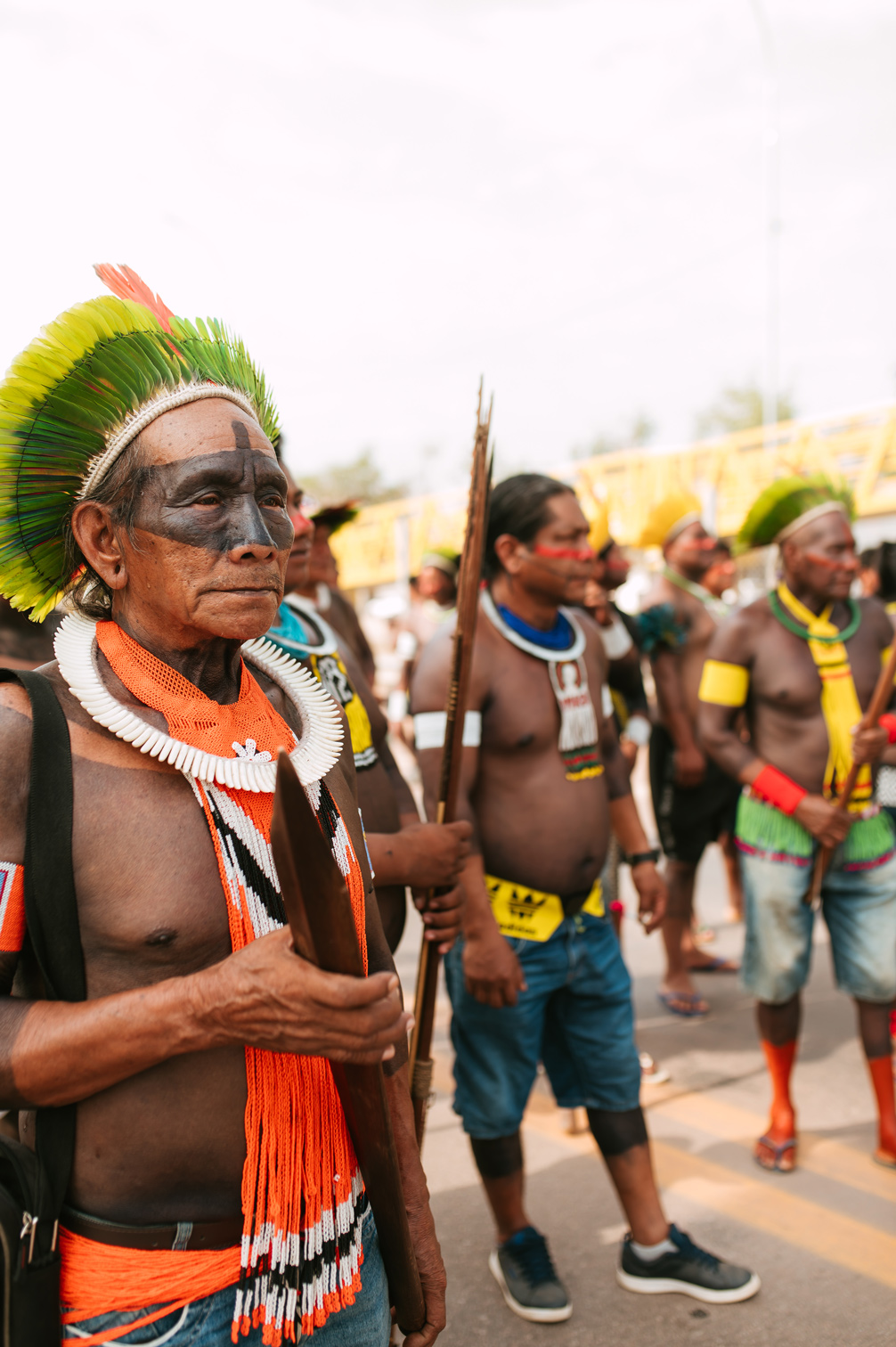
photos: Débora Siqueira
An agreement left hanging
“We are protesting the delay in approving the Emergency Plan, which is an interim measure ahead of the BR-163 PBA. At the time, we reached an agreement with Via Brasil to guarantee these emergency measures while the studies of the highway’s impacts were completed and approved by Funai and the other responsible agencies. So far, the concessionaire has not said anything about returning the studies or about continuing this agreement. We want to make our message clear: the Federal Prosecutor’s Office in Altamira has already been informed of our mobilization, so that our demands can be taken to the courts.”
— Doto Takak-Ire, president of Instituto Kabu
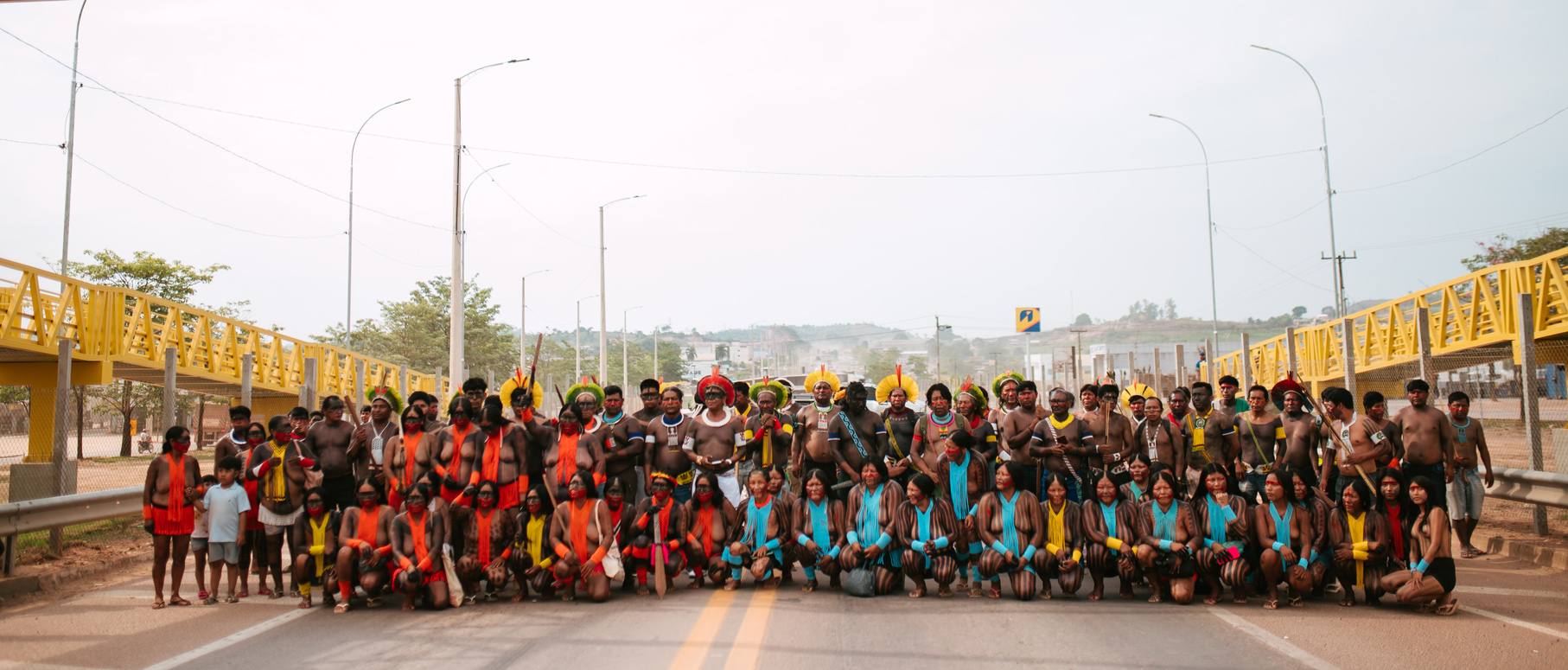
photo: Débora Siqueira
In August 2026, after a thorough process of consulting their communities, the three organizations sent their proposals for the next cycle to Via Brasil and the Federal Court. The company’s reply came on September 4, and the associations say it fell short. Via Brasil asked for more time for technical analysis and questioned the amounts, but it did not dispute any of the proposed measures individually.
A final plan that keeps slipping
The emergency measures were only ever meant to be temporary. They were supposed to be replaced by the final PBA-CI, but that plan has faced repeated delays.
In a filing to the Federal Court on August 31, 2026, the National Foundation of Indigenous Peoples (Funai) noted that the agreed timeline hadn’t been met. The plan was due in January but was only filed on May 29, after a series of extension requests. Funai also found no evidence that the Indigenous organizations had been consulted about the changes to the timeline. Key pieces are still missing, including architectural and engineering designs and a work plan for maintaining and repairing the access roads to the villages.
For the organizations, repeated emergency cycles that don’t cover the communities’ real needs can’t replace the plan they were promised.
Growing threats on the ground
The stakes go well beyond paperwork. According to data from the Rede Xingu+ network cited by the organizations, illegal gold mining and other illicit activities are pushing into the borders of Indigenous lands. There are signs that the BR-163 itself and access roads near the villages are being used as logistics routes for these activities.
That’s why leaders see the PBA-CI’s surveillance and territorial protection measures as essential. Without them, the communities lose key tools for defending their land.
The courts have started to respond. On September 2, the judge of the Federal Civil and Criminal Court of Altamira ordered Funai, the Federal Prosecutor’s Office and Via Brasil to respond on the immediate payment of minimum amounts. That payment would keep the emergency measures running while the full proposals are reviewed.
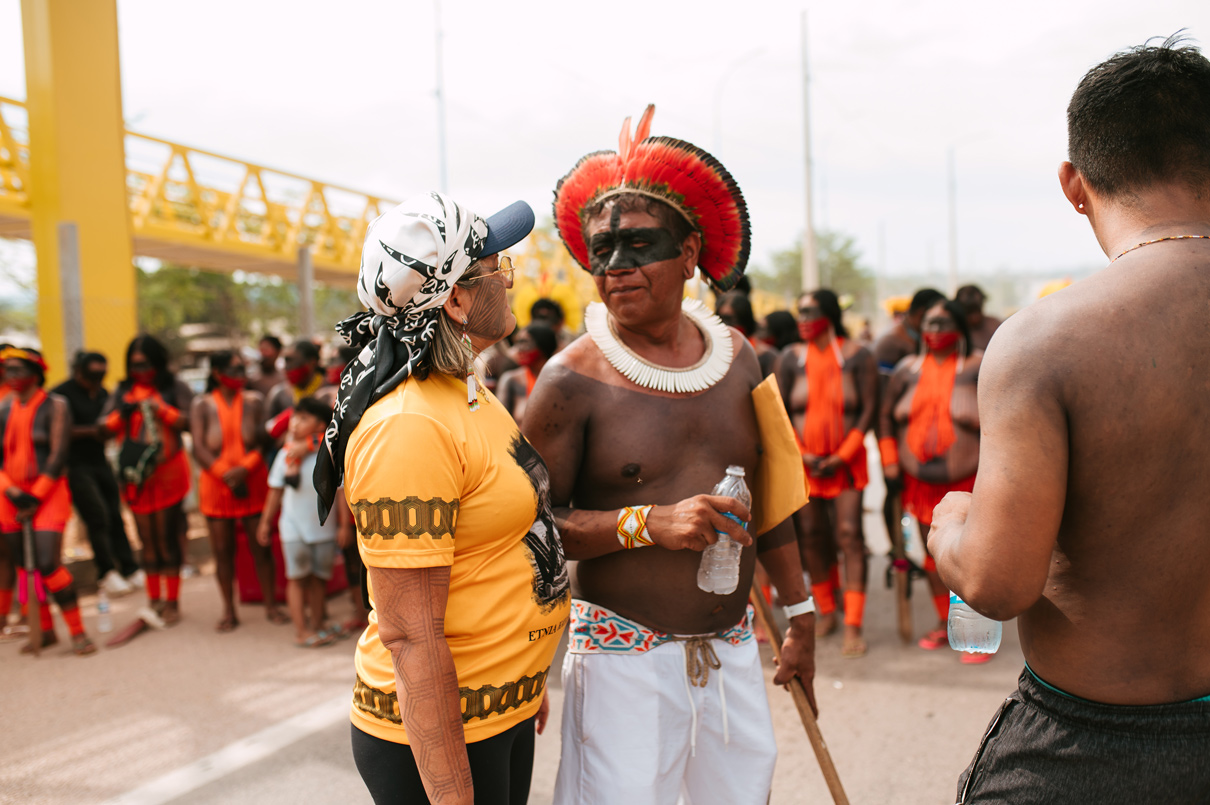
photo: Débora Siqueira
"We're doing our part"
“We’re already mobilized to send our message to Via Brasil and Funai about the delay in reviewing and approving the BR-163 PBA. Together with the Indigenous organizations, we brought together our warriors, chiefs and leaders to hold this protest on the highway. We’re doing our part, and we don’t want to wait any longer. We want an immediate response from the concessionaire.”
— Be-i Kayapó, president of Associação Indígena Mantinó
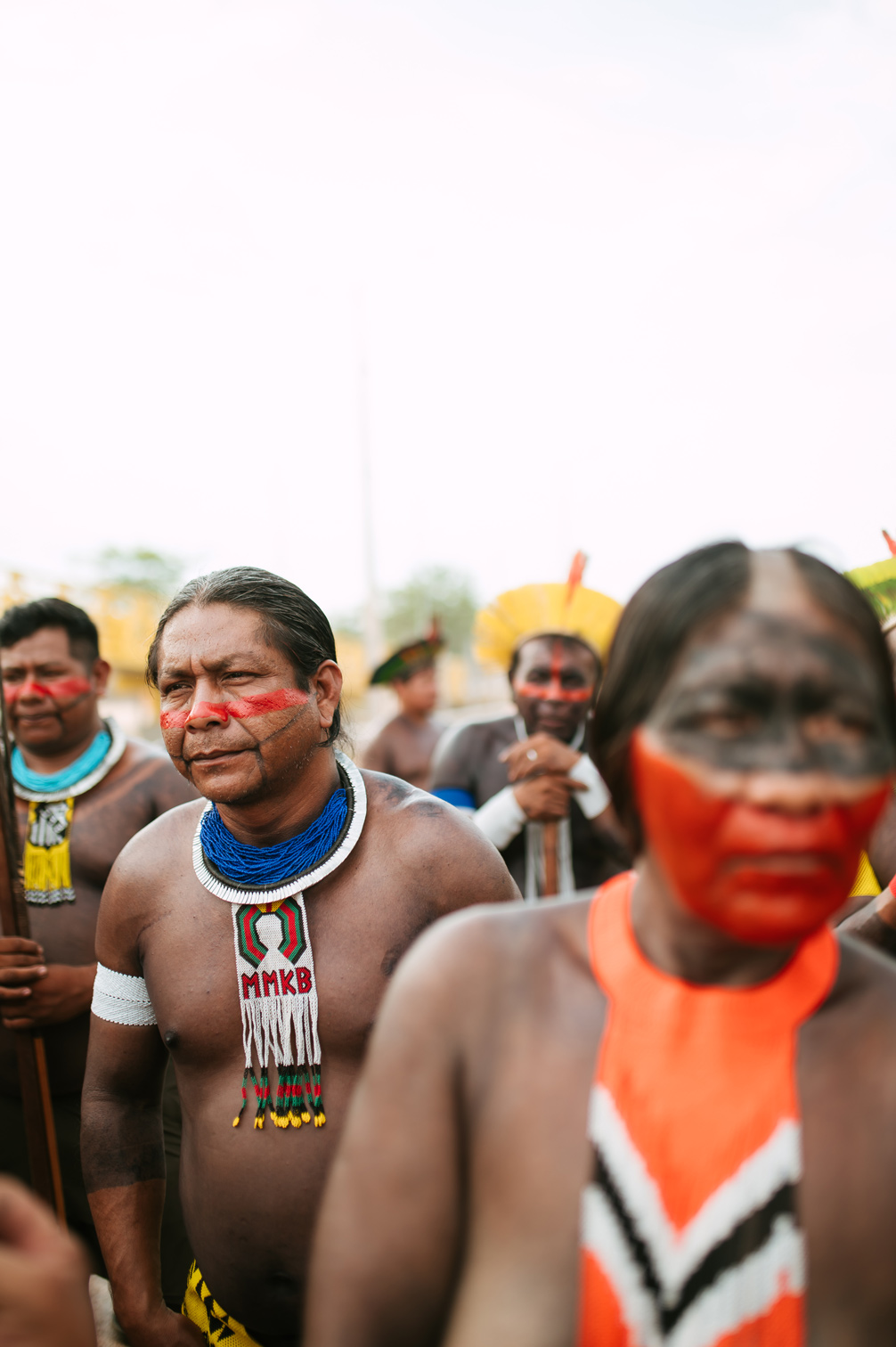
photos: Débora Siqueira
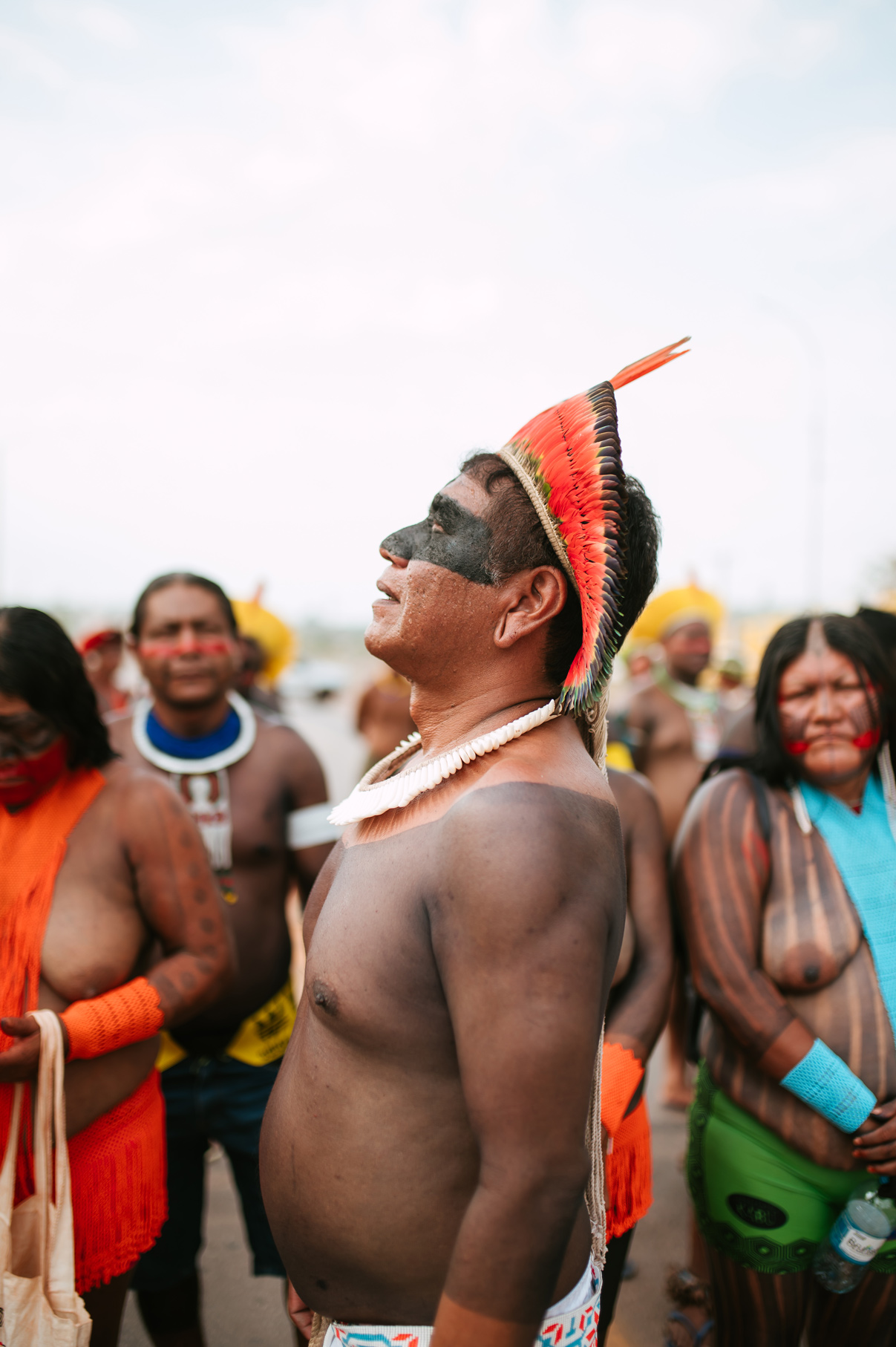
What the Kayapo and Panará are demanding
-
01
Immediate formalization of the fourth cycle of emergency measures
-
02
An individual technical review of each of their proposals
-
03
Continued emergency funding
-
04
Completion of Funai's review of the final PBA-CI, with free, prior and informed consultation of the communities on any changes to the timeline
The current cycle ends on September 30. The communities are asking for answers before then.
This highway cuts through Kayapo and Panará territory and profits from it every day. The least the company can do is honor what it owes.
Solidarity with the Kayapo and Panará.
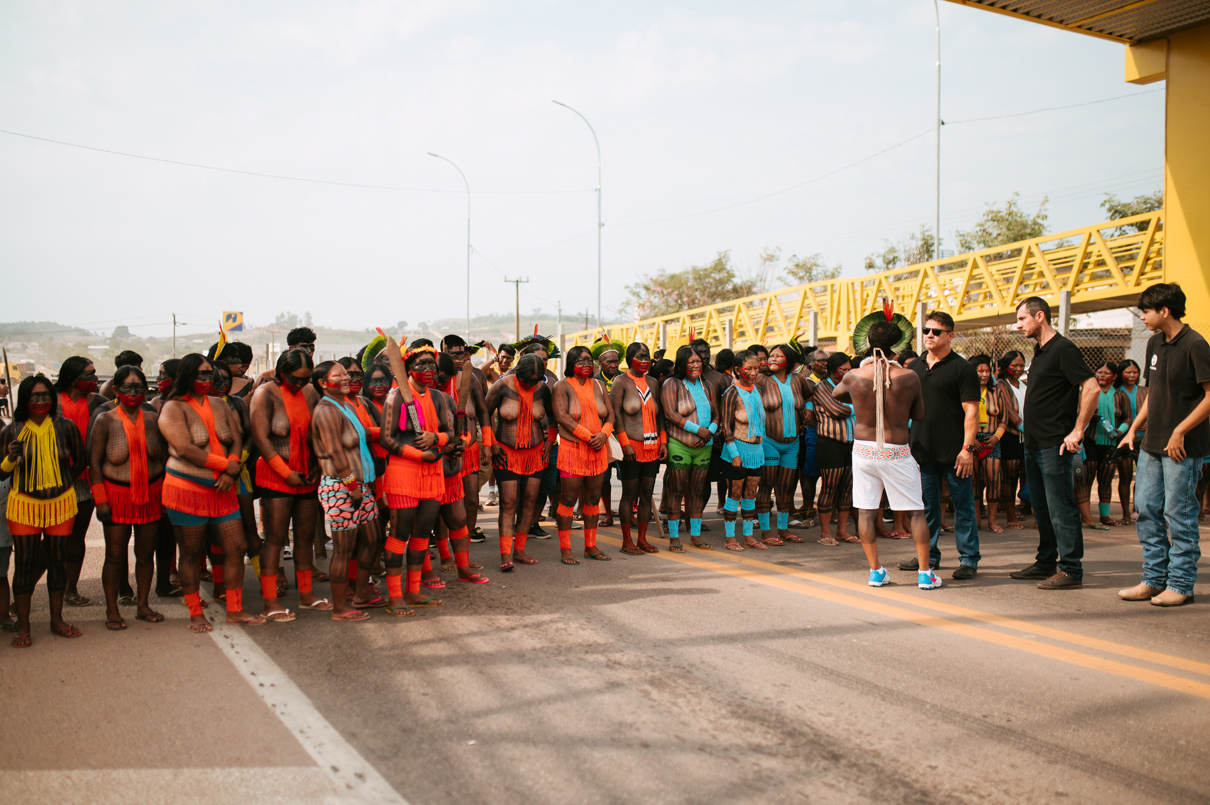
photos: Débora Siqueira

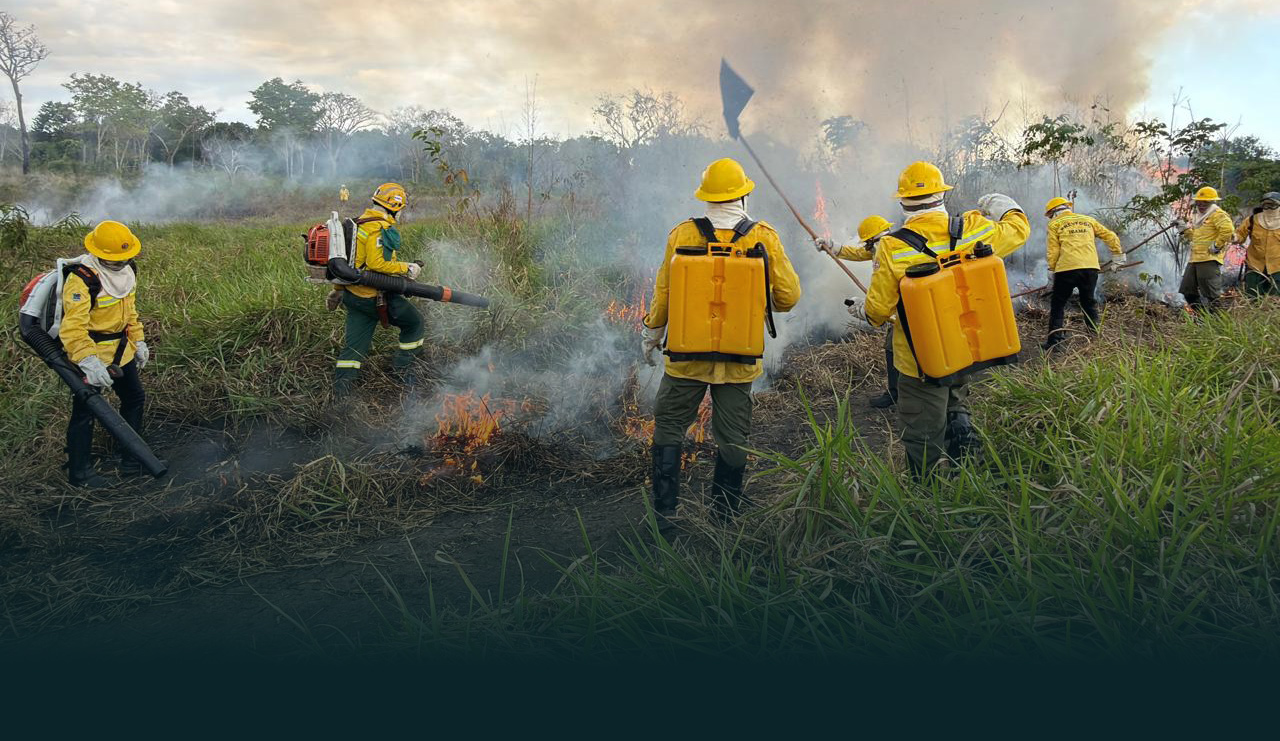
Fighting Fire With Knowledge
Fire has always been part of life in the Kayapo Indigenous Territory. For generations, Kayapo families have used fire to clear and renew their traditional crop fields, following knowledge about when and how to burn that has been passed down over centuries. But the conditions that knowledge was built for are changing.
The Kayapo Territory is home to one of the largest stretches of intact forest in the Amazon, and most of it stays moist enough to resist fire. But it sits at a transition zone. In the south, the forest gradually gives way to savanna, where vegetation is drier and fire spreads more easily. The whole region is also under growing pressure from climate change: this part of the Amazon is steadily getting drier, with more frequent droughts and longer, harsher dry seasons. As the forest loses moisture, a fire that gets out of control can turn into a wildfire that destroys large areas of forest, crops and hunting grounds within days.
This year the risk is even higher. The El Niño climate pattern can bring hotter, drier conditions to the region, which makes every use of fire more dangerous.
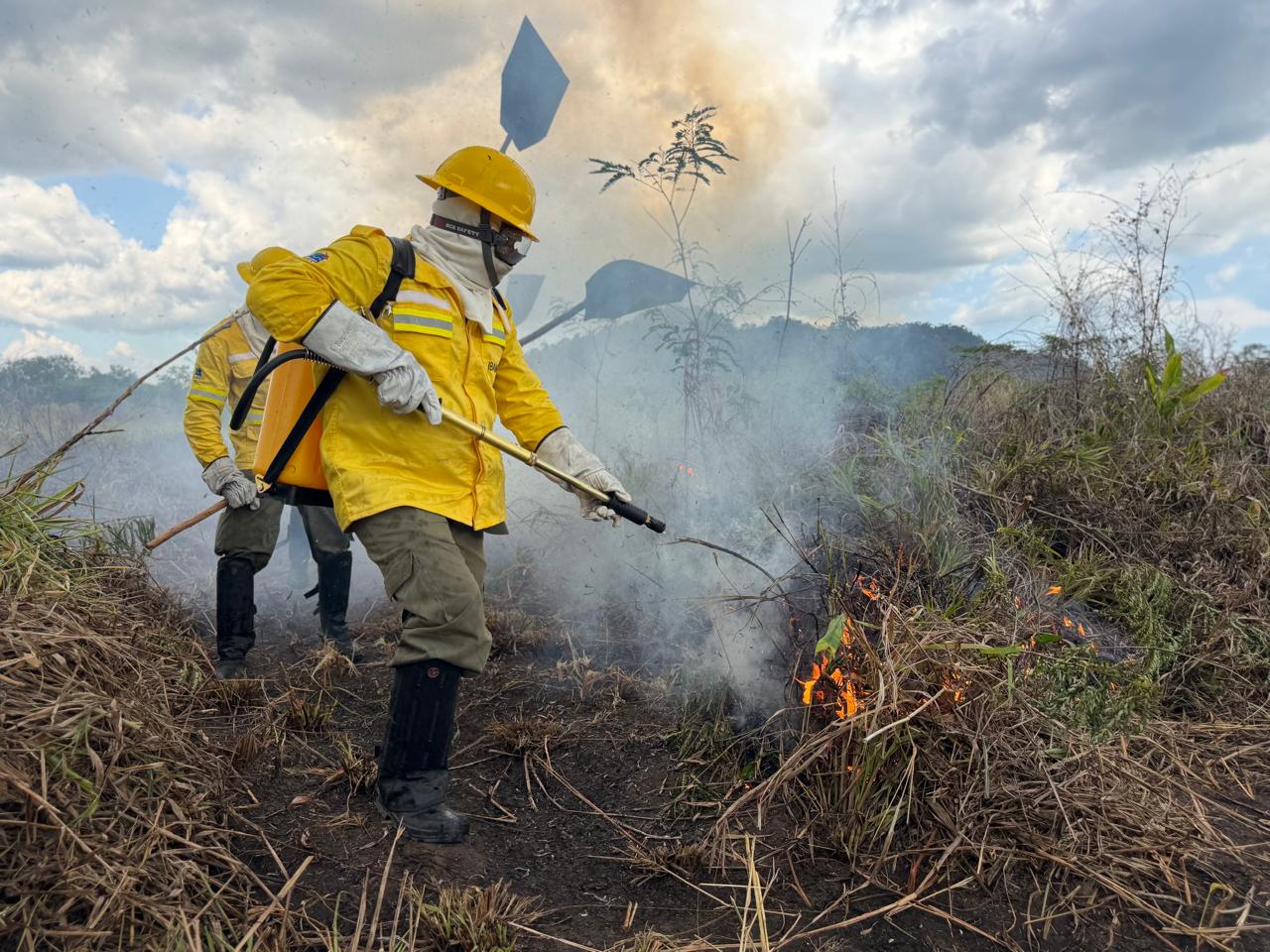
The instructor and firefighter, Traiú Assalu Mehinaco, ignites a plot of vegetation dominated by Brachiaria grass using a drip torch as part of a practical exercise during the course.
From September 9 to 11, 2026, the Protected Forest Association (Associação Floresta Protegida, AFP), Brazil’s National Foundation for Indigenous Peoples (Funai), and PrevFogo, the national fire prevention and firefighting center of Ibama (the Brazilian Institute of Environment and Renewable Natural Resources), held a fire management workshop in Kruwanhõngô village, in the Kayapo Indigenous Territory.
The main goal was to help communities prevent forest fires by using fire in their traditional crop fields in a proper, controlled way, drawing on both traditional knowledge and new techniques and equipment.
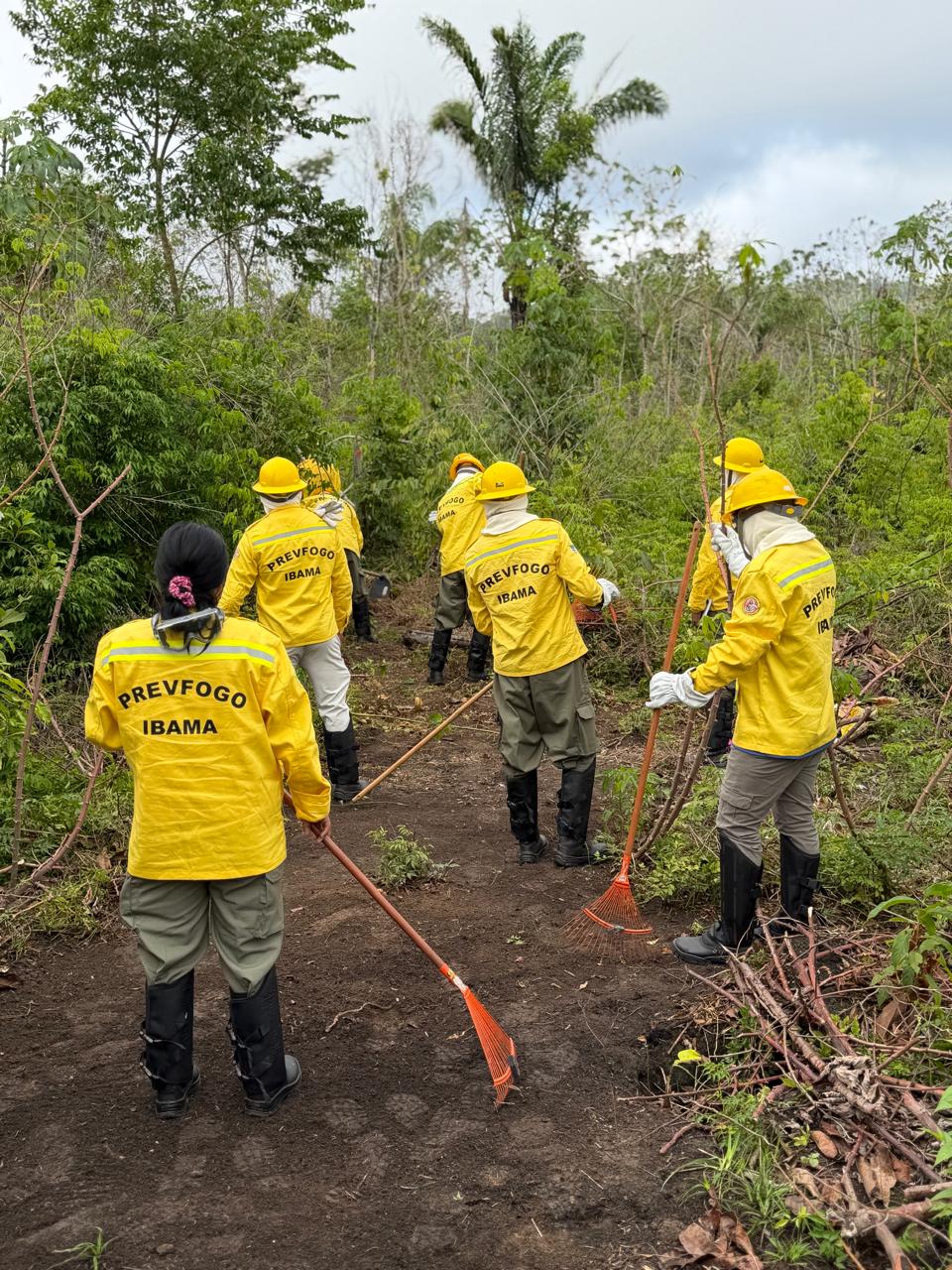
Kayapo course participants creating a “firebreak” as part of a practical exercise in forest fire prevention and suppression.
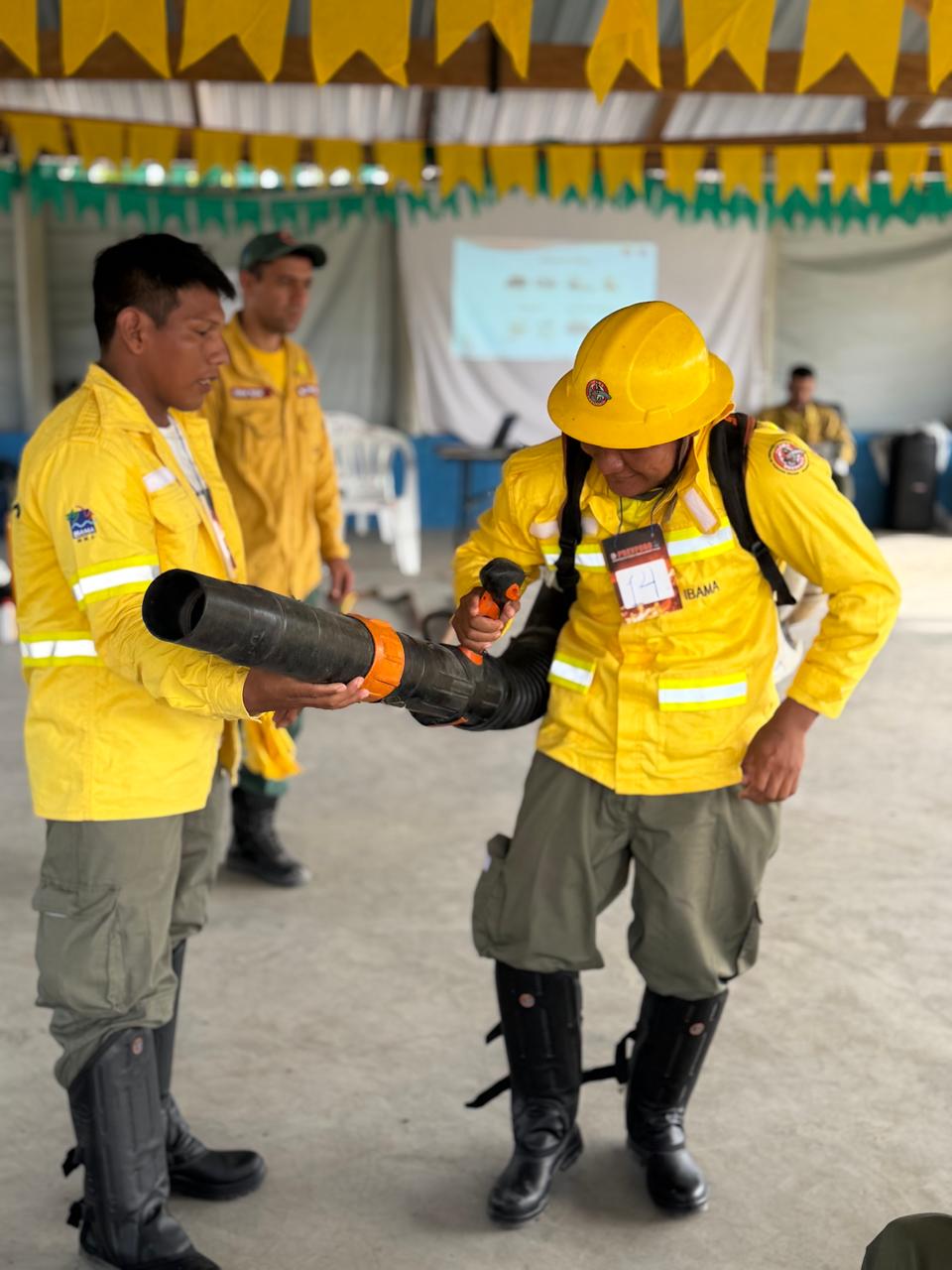
Training on the use of blowers for the prevention and suppression of forest fires during the fire management course.
The training reflected that combined approach. Experienced firefighters and instructors from PrevFogo and from Funai’s Integrated Fire Management Coordination provided technical training. They were joined by Traiú Assalu Mehinaco, an Indigenous firefighter and environmental educator from the Xingu Indigenous Territory, and by two Kayapo elders: Takaknhotire Kayapo of Kamoktidjam village and Takakmakoro Kayapo of Kokotkrere village.
Together, participants talked about the climate crisis and how it is affecting the weather, rainfall patterns and the vulnerability of the Kayapo Territory’s forests to wildfires. They also discussed why new strategies are needed to face this challenge, building on traditional knowledge while adopting new tools and methods.
Participants rated the workshop very positively and left motivated to share what they learned with their communities. Over the coming months, the 25 Kayapo participants will carry this work back to their villages and lead fire prevention efforts on the ground.
Before leaving, they made a set of collective agreements. Each participant committed to:
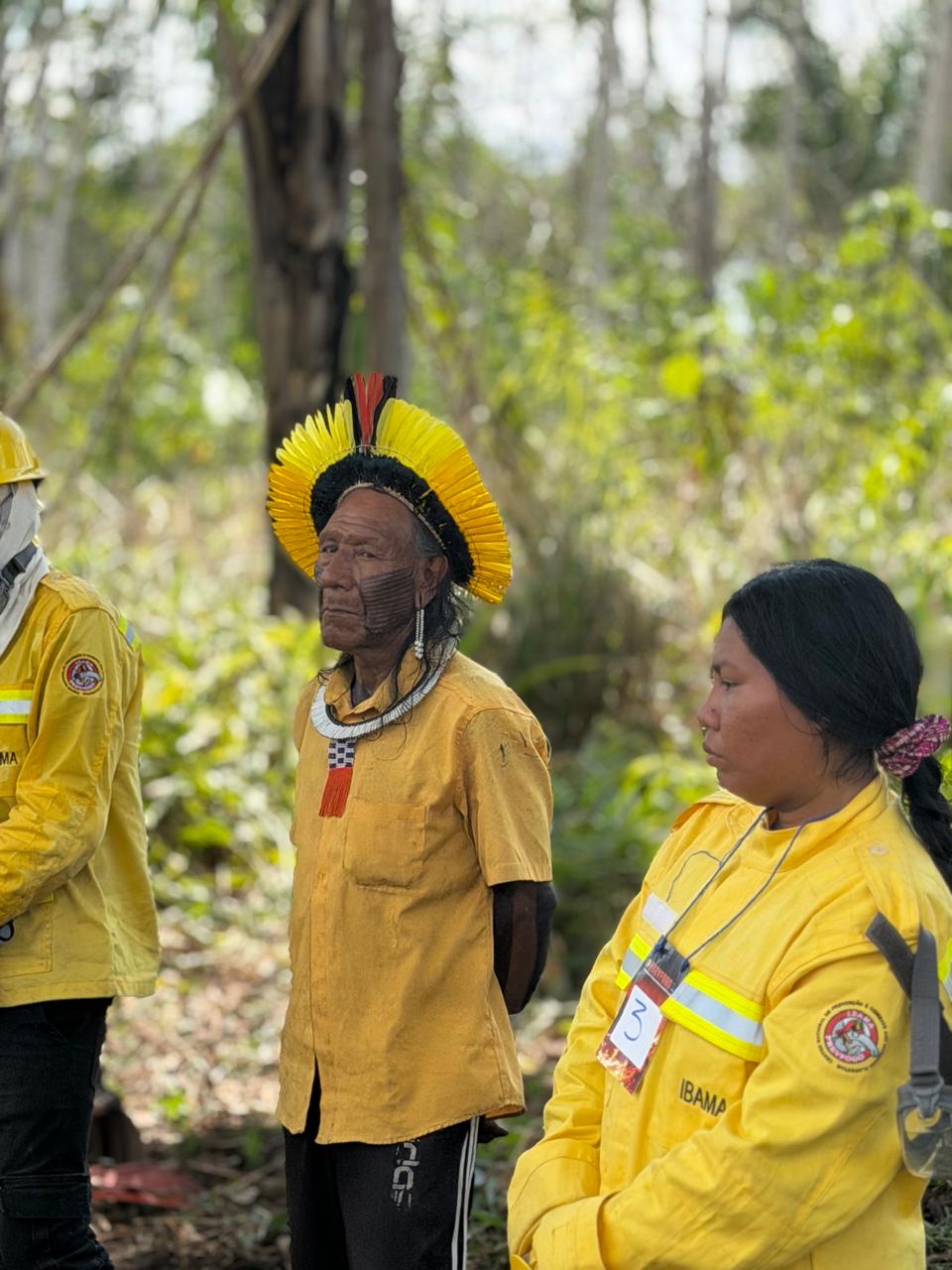
Holding meetings in their own community to raise awareness that every family has a role in preventing forest fires, and that more care is needed in all everyday uses of fire — cooking in the village, fire used on hunting and fishing trips, children playing with fire, and throwing away cigarette butts.
Reviewing how and where their community burns garbage, and taking steps to make this practice safer.
Supporting PrevFogo and Funai teams as they coordinate with communities across the Kayapo Territory, so that any crop fields still waiting to be burned are burned only with technical supervision from PrevFogo. This makes sure all preventive measures are in place and helps avoid forest fires, especially given the possible impacts of El Niño.
The workshop and the participants’ continuing work are the result of a partnership between AFP, Funai and PrevFogo/Ibama. Biome Conservation provides technical and financial support. Additional funding comes from Re:wild, the Bezos Earth Fund, and the Tradition and Future in the Amazon project (Tradição e Futuro na Amazônia), which is managed by Funbio with funding from Petrobras.